

Automobili Lamborghini turns 63 on May 7, 2026, and the Sant’Agata Bolognese company has chosen to mark the occasion with a weekend at Imola rather than a press release and a cake. The second edition of Lamborghini Arena runs Saturday May 9 and Sunday May 10 at Autodromo di Imola, with more than 400 customer cars on hand, the Polo Storico historic collection on display, and the new Temerario Super Trofeo race car making its dynamic debut between Super Trofeo Europe sessions.
The anniversary is the news peg. The more interesting story is what has happened to the number 63 itself in the decades since Ferruccio Lamborghini founded the company. It has stopped being a date and become a signature — embedded into the language of the modern brand, recurring across exclusive editions, special configurations, motorsport programs, and even cross-marque collaborations. Automobili Lamborghini turns 63 with that signature in plain sight for anyone who knows where to look.
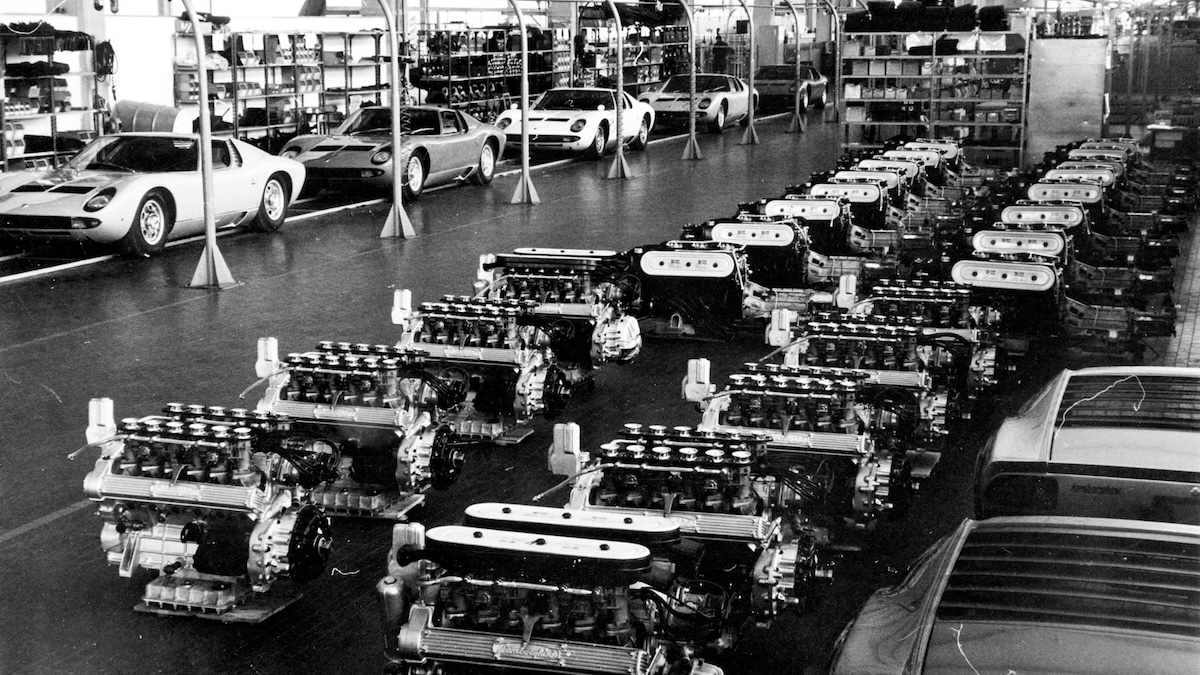
From 7 May 1963 to Sant’Agata Today: The Founding of Automobili Lamborghini
The Automobili Lamborghini founding story compresses into roughly six months of 1963, and the dates matter. The company was officially incorporated on 7 May 1963 — the date the modern brand still anniversaries against. On 2 October of the same year, the first 3.5-litre V12 was fired up on the test bench at Sant’Agata, an engine architecture that would evolve over six decades into the flagship V12 of the Aventador and, with hybridization, the Revuelto.
The 350 GTV prototype was presented to the Italian press on 20 October 1963 with the Sant’Agata factory still under construction in the background. Ten days later, on 30 October, the 350 GTV had its public unveiling at the Turin Motor Show. From founding paperwork to first public car: six months. Ferruccio Lamborghini’s stated brief was simply to build something that did not yet exist, and to build it in a way that did not resemble or follow anyone.
Stephan Winkelmann, who has led Automobili Lamborghini through its current model generation, frames the anniversary in continuity terms — 1963 as the beginning of a vision the company still operates inside. The Sant’Agata facility itself is now a closed campus of design studios, production lines, R&D, and the Polo Storico restoration division, but the original 1963 architectural footprint is still visible inside the larger plant. The continuity is structural, not symbolic.
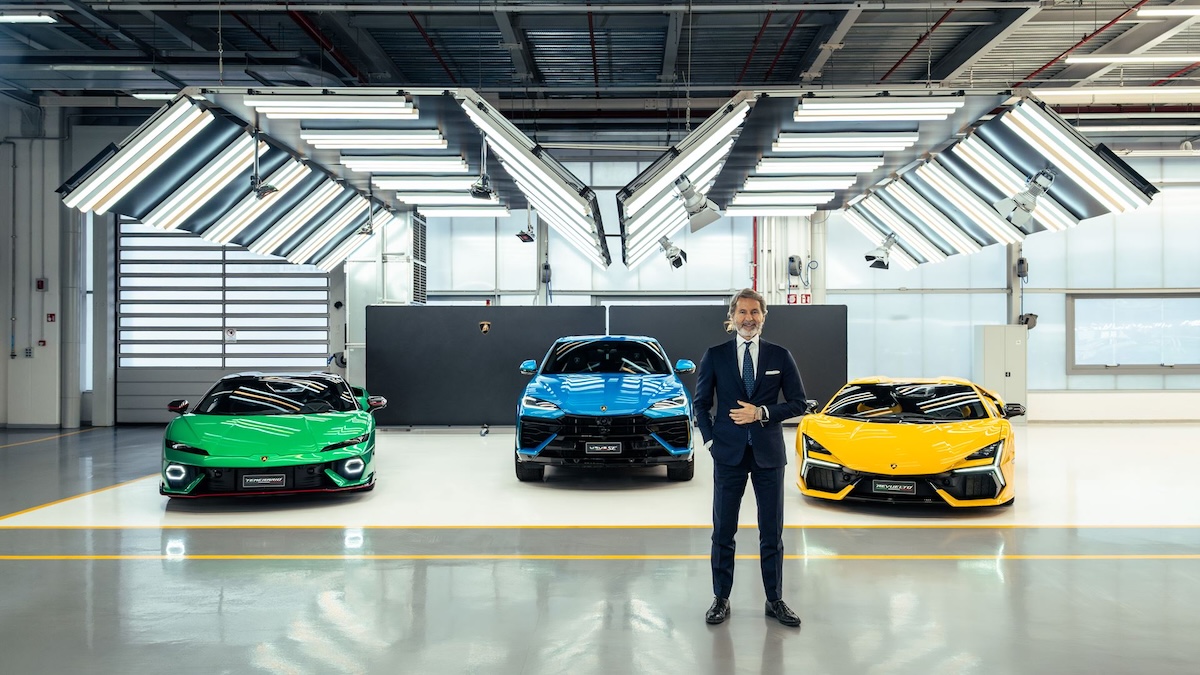
Automobili Lamborghini Turns 63: The Signature in the Sian FKP 37, Aventador SVJ 63, and SC63
The most overt expression of 63 inside the modern Automobili Lamborghini lineup is the Sián FKP 37. The hybrid V12 supercar was produced in exactly 63 examples — the first chapter of Lamborghini’s hybrid era and the explicit start of the 63-as-production-run tradition. Every Sián carries a copper “63” emblem on the rear quarter, a designed signature rather than a serial number. The cars are now firmly inside collector hands and almost never offered publicly.
The Aventador SVJ 63 and SVJ 63 Roadster took the signature one step further by writing it directly into the model name. Both were limited editions inside the broader SVJ line, with the 63 designation reinforcing exclusivity and reshaping resale-value curves on the secondary market accordingly. The treatment is restrained — bespoke trim, a number on the badge, no flag-waving — which is precisely why it works on cars at this price point.
The SC63 hybrid prototype carries the signature into motorsport. Built by Squadra Corse for the FIA World Endurance Championship Hypercar class, the SC63 represents Lamborghini’s most ambitious factory racing program in decades — and the model designation puts the brand’s founding year directly on the timing screens at Le Mans, Spa, and Sebring. The fact that the road-going Sián, the limited-edition Aventador, and the WEC hypercar all share the same number is not an accident. It is brand language working at full volume.
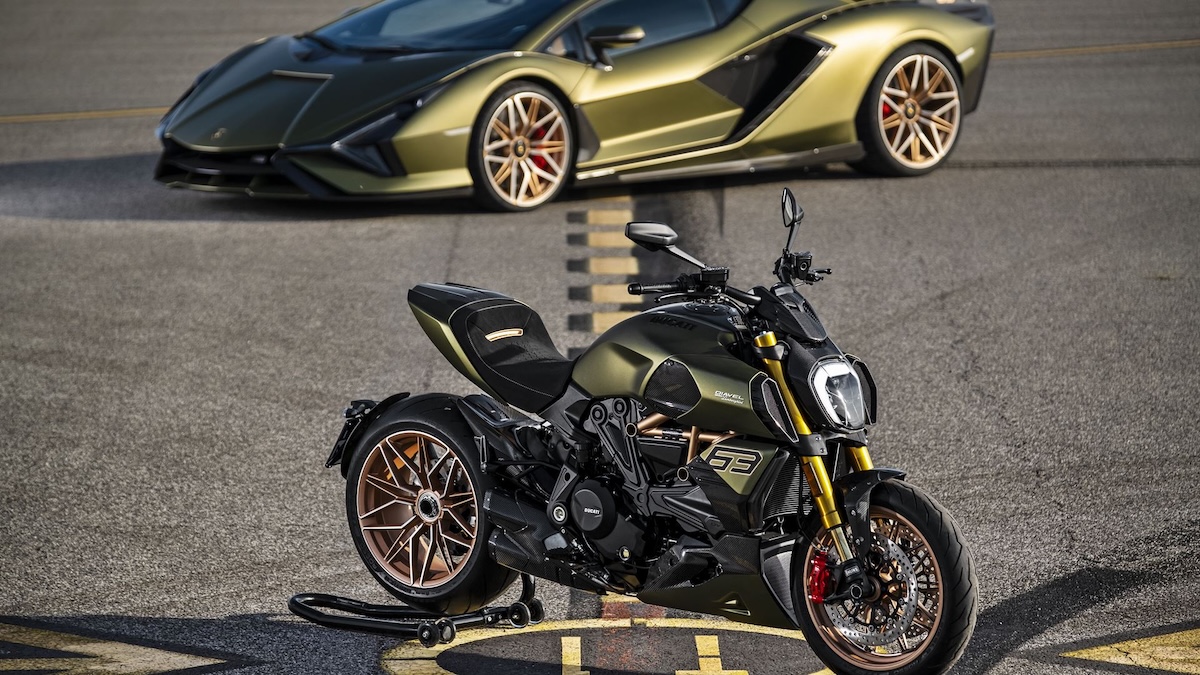
Automobili Lamborghini Turns 63: Giallo Maggio, Ducati Collaborations, and Cross-Marque Culture
The 63 signature travels outside the model lineup, too. Giallo Maggio is the most quietly meaningful color in the Lamborghini Ad Personam catalog — a yellow named for the month of May, the month the company was founded. Sant’Agata offers it to clients commissioning the most exclusive configurations, and informed collectors increasingly choose it specifically because they know the reference. It is a color that carries the brand’s founding date in a way only the configurator can decode.
The cross-marque expressions of 63 are equally worth flagging. The Diavel 1260 Lamborghini, a limited collaboration between Sant’Agata and Ducati, wore the number on the tank alongside Lamborghini-derived bodywork cues borrowed from the Sián. The Panigale V4 Lamborghini Speciale Clienti, available only to existing Lamborghini owners, extended the partnership into Ducati’s superbike platform. Both bikes were built in limited numbers and both used 63 as the visual handshake between the two Italian houses.
The pattern is consistent enough to read as policy rather than coincidence. As Automobili Lamborghini turns 63, the brand has built a recognizable internal code around its founding year, and that code travels — across models, across collaborations, across paint chips, across racing platforms. For the customer fluent in the language, every appearance of 63 is a small confirmation that the brand is still operating from the same script Ferruccio wrote in 1963.
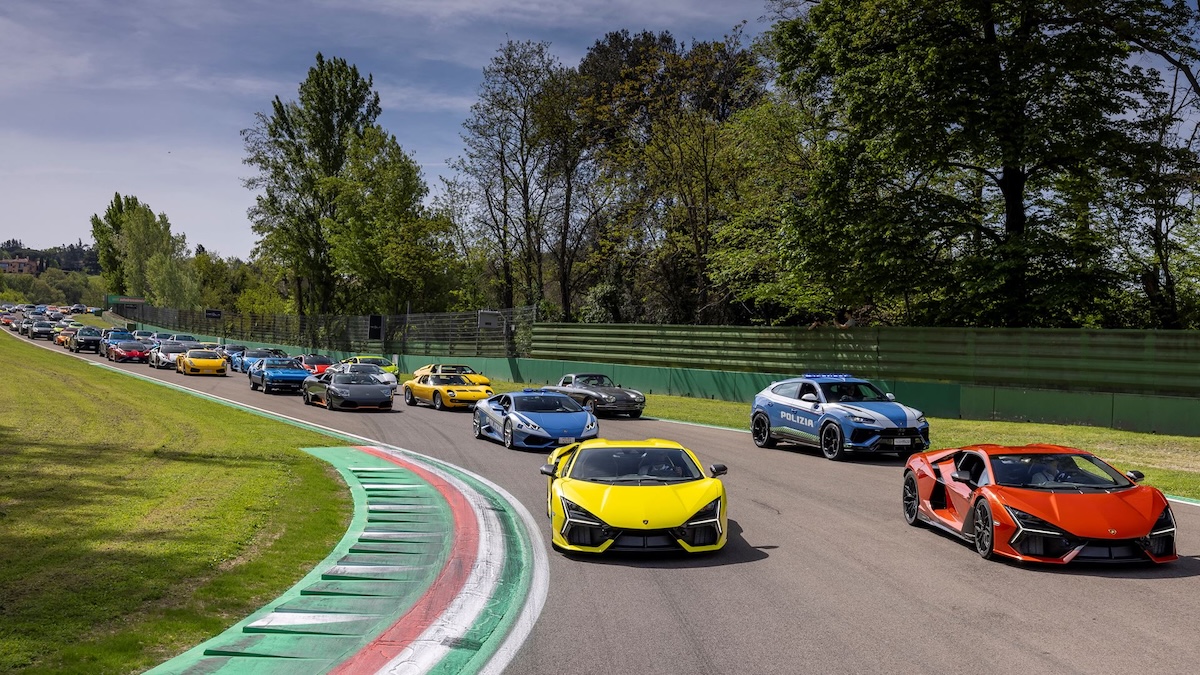
Lamborghini Arena 2026: Where Automobili Lamborghini Turns 63 in Practice
Lamborghini Arena, the brand’s customer and enthusiast gathering, returned to Imola for its second edition the weekend Automobili Lamborghini turns 63. More than 400 road cars filled the paddock and the parade laps, with a Polo Storico contingent of historically significant Lamborghinis displayed alongside the current Temerario, Urus SE, and Revuelto lineup. The Sunday parade laps put a procession of Miuras, Countachs, Diablos, Aventadors, and Revueltos onto the actual circuit through Imola’s Italian-flag rumble strips.
The on-track centerpiece was the Temerario Super Trofeo race car, unveiled in its final production version and demonstrated by Factory Driver Marco Mapelli between the two Sunday Super Trofeo Europe races. The Arena weekend gave the new race car a stage and gave the brand a place to do what it had set out to do in 1963 — bring customers, the cars themselves, and the people who make them all into the same room. Sixty-three years on, Automobili Lamborghini is still operating from that original instruction. The best, the company likes to suggest, is still to come.
About The Author

You may also like
-
The Stark VARG SM Sköll Is a 500-Unit Study in Blacked-Out Restraint
-
Ducati’s New Cycling Range Brings Motorcycle DNA to Road, Gravel, and E-MTB Bikes
-
The AMB 002 Roadster Is Aston Martin’s First Motorcycle You Can Actually Ride to Work
-
FuelFest Returns to New Jersey Motorsports Park With Cody Walker and Tyrese Gibson
-
The Radnor Hunt Concours d’Elegance Brings Bond, James Bond, to Pennsylvania