
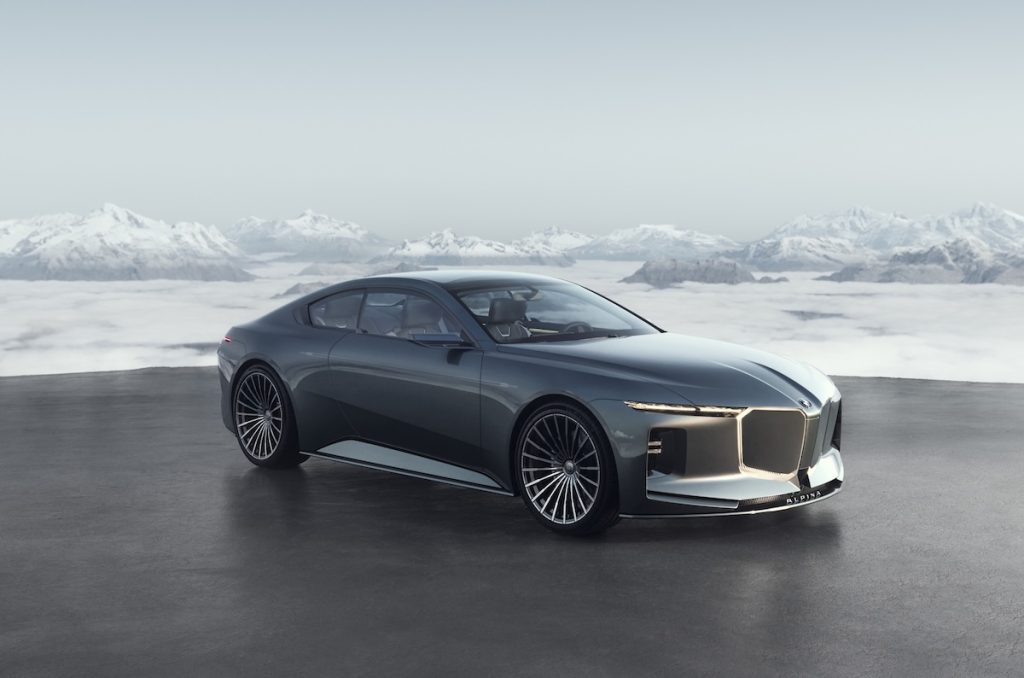
The Vision BMW ALPINA made its public debut at Concorso d’Eleganza Villa d’Este on May 15, 2026 — the first design statement from BMW ALPINA since the brand became an exclusive tier within the BMW Group earlier this year. It is a one-of-one study, not a production preview in the conventional sense, but a direction-setting document: this is what BMW Group believes BMW ALPINA should look like, feel like, and mean going forward.
Oliver Viellechner, head of BMW ALPINA, has been precise about the positioning: BMW ALPINA occupies the space between BMW and Rolls-Royce. The Vision BMW ALPINA is the first physical answer to that brief. It lands on the same Villa d’Este lawn as the BMW Motorrad Vision K18 — two BMW Group vision vehicles defining the brand’s direction on the same day.
Vision BMW ALPINA Design: The Speed Feature Line and Second Read Sophistication
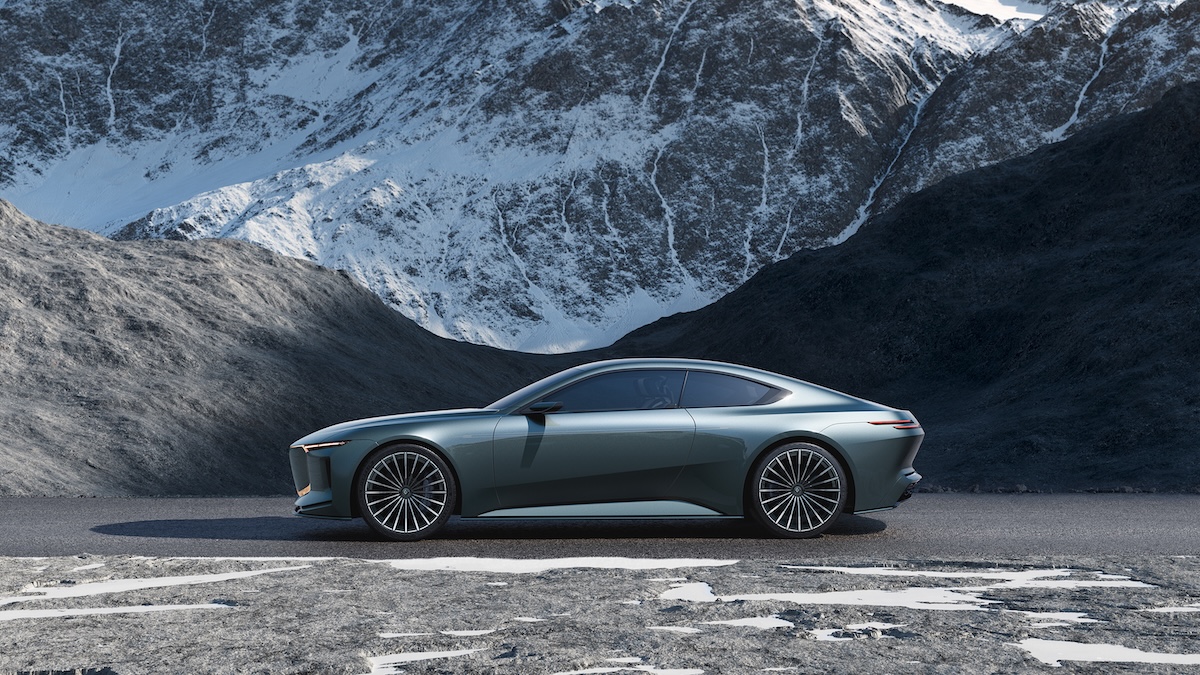
At 204.7 inches, the Vision BMW ALPINA is substantial — wide, low, and coupe-roofed, with a silhouette that reads fast without announcing itself. The organizing principle of the exterior is the speed feature line: a single continuous gesture that rises from the lower front corners at six degrees, runs the full length of the body, and wraps around the rear. Assertive enough to suggest motion at rest, controlled enough to remain composed at speed.
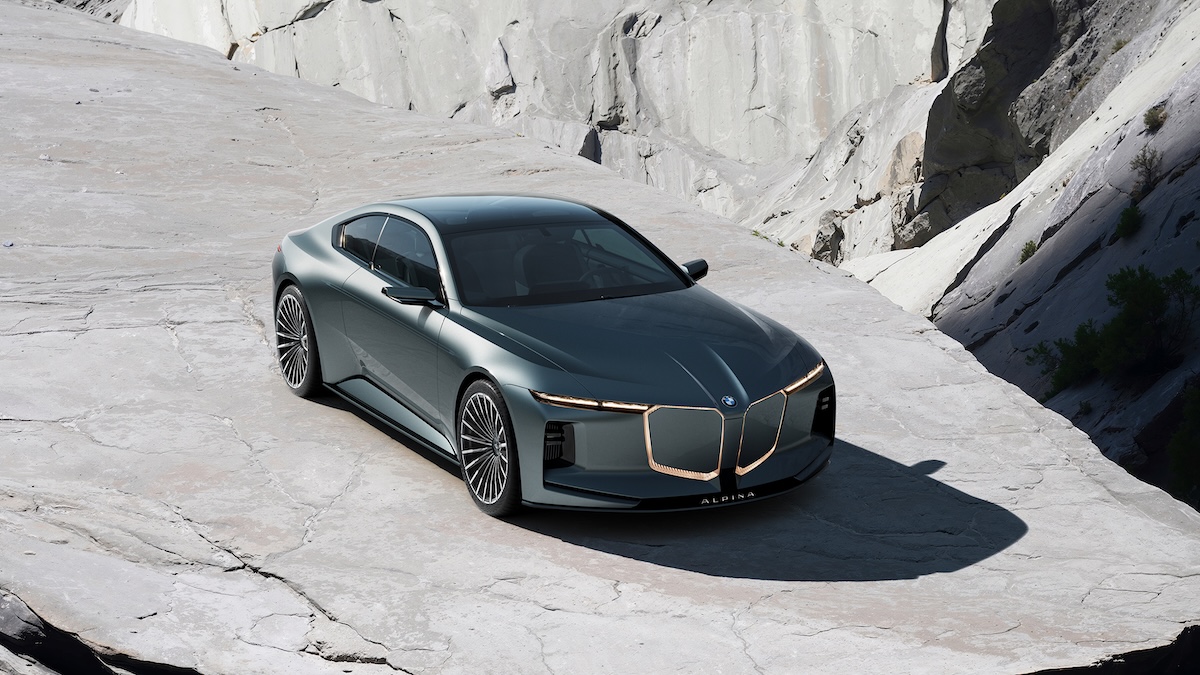
The shark nose, a signature tracing back to the Alpina B7 coupé, reinterprets BMW’s kidney grille as a three-dimensional sculpture. The inner surfaces carry a finely scaled deco-line graphic, and a concealed perimeter reveals itself only when backlit — the opening gesture of the Second Read principle that runs throughout the car. Deco-lines, present in Alpina’s visual language since 1974, are distilled and painted beneath the clear coat, present to those who know the brand.
Inward-facing return surfaces are treated in a dark metallic tone, an approach borrowed from the BMW 507, which reserves chrome only for the inner face of its kidney grilles. The 22-inch front and 23-inch rear wheels carry the 20-spoke design Alpina has used since 1971. Maximilian Missoni, head of BMW ALPINA design, describes the governing logic: the statements the Vision BMW ALPINA makes are subtle, surfacing only on a closer read.
Vision BMW ALPINA Interior: Architectural Clarity and Watchmaking-Grade Craft
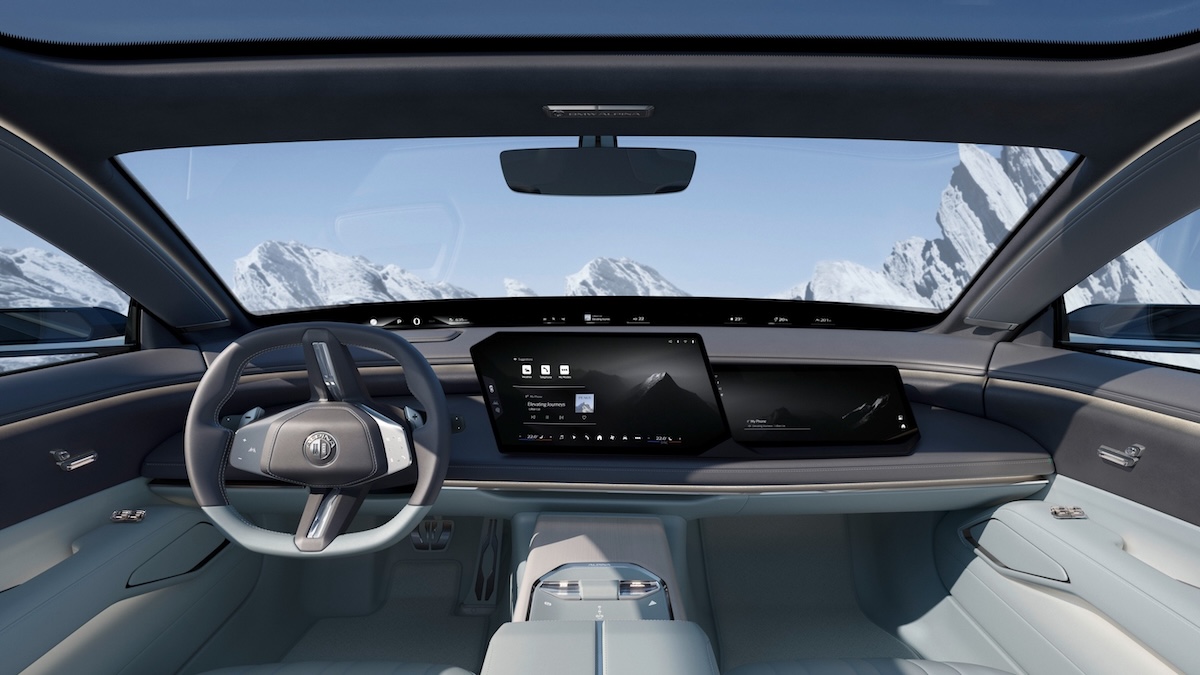
The cabin carries the same six-degree speed feature line from the exterior — dividing a darker upper zone from a lighter lower one, creating a continuous visual thread that runs from the front bumper through to the rear seats. Full-grain leather sourced from producers across the Alpine region lines the surfaces. Stitching is inspired by the deco-lines: bridge stitches in heritage blue and green applied sparingly, referencing historic Alpina steering wheel hand-stitching.
Metal components are treated with a watchmaking-inspired beveling technique — satin and polished finishes combined. Crystal is reserved specifically for the controls that govern how the car drives: a deliberate hierarchy that communicates where BMW ALPINA places its values. Behind the rear console, crystal glasses etched with 20 deco-lines and a six-degree rim profile rise on a self-deploying mechanism, held by concealed magnets and lit from below against open-grain wood.
BMW Panoramic iDrive spans the dashboard with a UI crafted specifically for ALPINA. Heritage blue and green appear with discipline, intensifying as the driver moves from Comfort+ to Speed mode. The head-up display’s background imagery is not generic: it is an exact rendering of the mountain range visible looking south from Buchloe — the town where Burkard Bovensiepen founded Alpina in 1965. The geography of the brand’s origin is embedded in every journey.
The Philosophy of the Vision BMW ALPINA: A Comfortable Driver Is a Faster Driver
Burkard Bovensiepen started with a premise most of the automotive world ignored: a comfortable driver extracts more from a car than an uncomfortable one. In endurance racing, while competitors stripped weight to find tenths, Burkard added padding to the driver’s seat. That insight shaped every road car that followed — celebrated not for aggression but for composure at sustained high speed, across the kind of distances that expose a car’s genuine character.
The Alpina B7 coupé of the late 1970s was the moment that philosophy reached its clearest expression in a production car. A long hood, wide stance, and shark nose that looked fast at rest, combined with a cabin that could carry four people across a continent without fatigue. The Vision BMW ALPINA is the next chapter — the same philosophy, applied with the resources and reach of a BMW Group brand.
Comfort+, the setting that goes beyond standard BMW comfort calibration, is retained in the Vision BMW ALPINA. It is not a marketing concession — it is the articulation of Burkard’s founding argument. Adrian van Hooydonk, head of BMW Group Design, describes BMW Group’s role: preserving BMW ALPINA’s distinctiveness and shaping it for a contemporary context. The Vision BMW ALPINA is the first evidence of that.
Vision BMW ALPINA and the Brand’s Position Within BMW Group
BMW ALPINA became an exclusive brand within the BMW Group in 2026. The institutional framing is clear: it occupies the space between BMW and Rolls-Royce, targeting buyers who want the dynamic commitment of a BMW amplified toward a specific ideal — speed and comfort not as competing priorities, but as a single integrated ambition. Oliver Viellechner describes the global community that has formed around the brand as something worth building on, not redirecting.
Villa d’Este was the right stage for the Vision BMW ALPINA’s debut. The concours has historically been where BMW Group frames its most aspirational design work — the same grounds where, earlier today, the BMW ALPINA motorcycle counterpart also appeared. The Vision BMW ALPINA is not a car that will arrive in a showroom unchanged. It is a letter of intent — from BMW Group to the people who have always understood what ALPINA means.
About The Author

You may also like
-
The Stark VARG SM Sköll Is a 500-Unit Study in Blacked-Out Restraint
-
Ducati’s New Cycling Range Brings Motorcycle DNA to Road, Gravel, and E-MTB Bikes
-
The AMB 002 Roadster Is Aston Martin’s First Motorcycle You Can Actually Ride to Work
-
FuelFest Returns to New Jersey Motorsports Park With Cody Walker and Tyrese Gibson
-
The Radnor Hunt Concours d’Elegance Brings Bond, James Bond, to Pennsylvania