
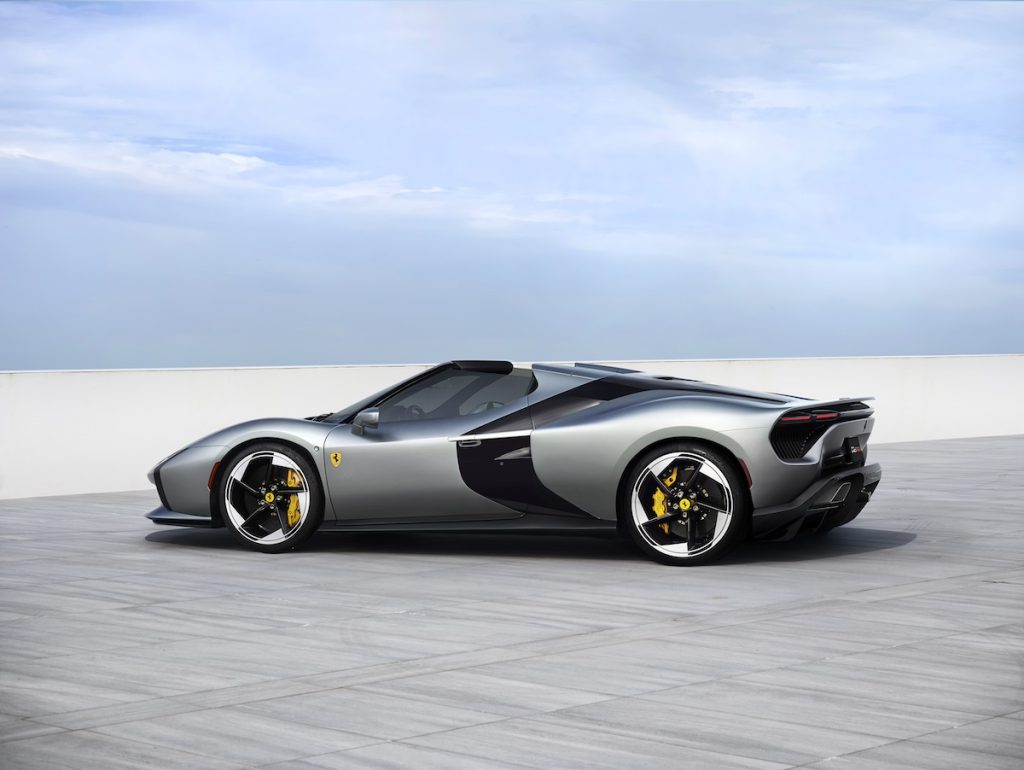
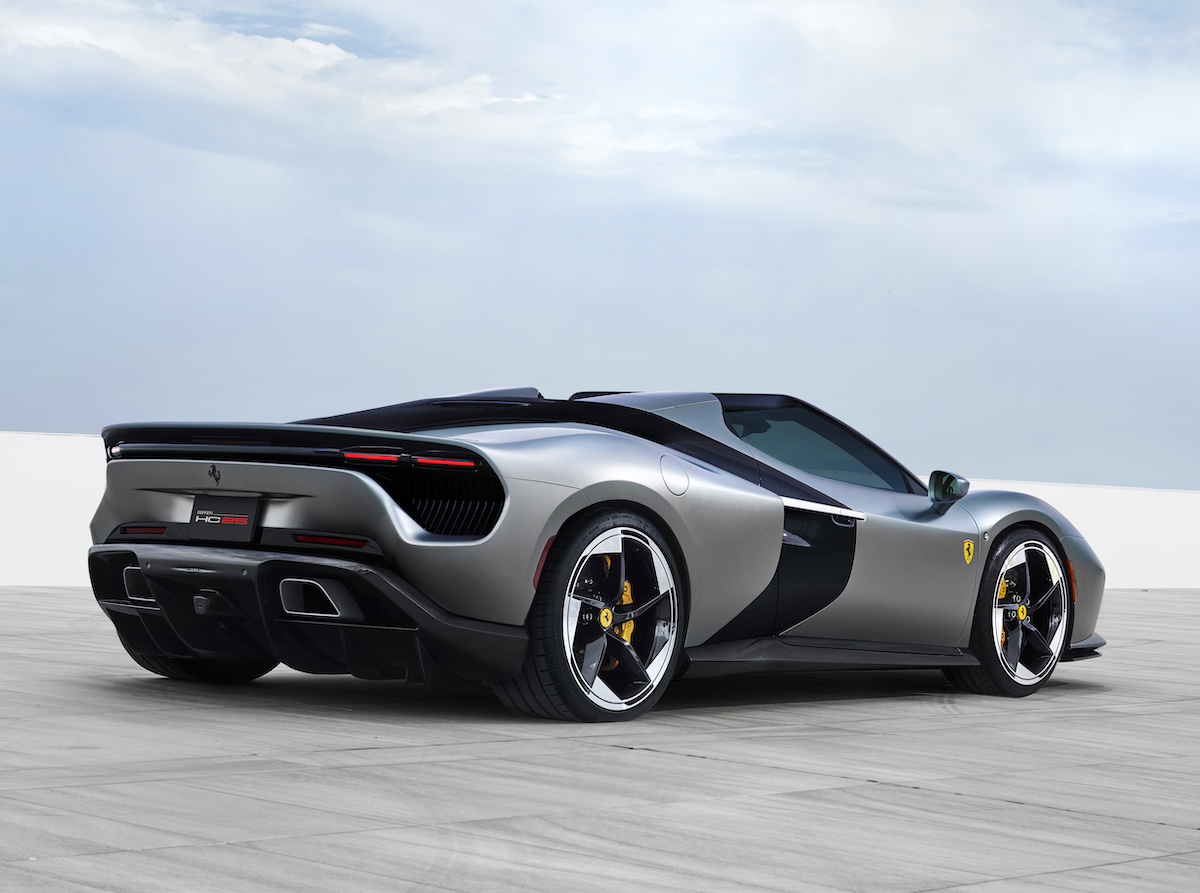
Ferrari took the wraps off a new One-Off this week at the Circuit of the Americas, and the Ferrari HC25 is one of those launches that’s worth slowing down for. It’s a roadster, derived from the F8 Spider, designed by Flavio Manzoni’s team in Maranello. But the more interesting story is what the car is positioned to do — close one chapter of Ferrari’s design and engineering history, and open another.
The F8 Spider was the last open-top Ferrari to carry the non-hybrid turbo V8 in a mid-rear position. The HC25 inherits that powertrain, chassis, and layout, then drapes it in a body that speaks the same visual vocabulary Ferrari has been developing on the F80 and 12Cilindri. Manzoni called the car an “ideal bridge” between those two eras — and the design genuinely does both jobs at once.
The Ferrari HC25 as a Design Bridge Between Two Eras
The F8 Spider mattered as a platform because of what it represented: the last mid-rear turbo V8 spider Ferrari would build before the entire flagship category went hybrid. That architecture defined a generation of open-top Ferraris — 458 Spider, 488 Spider, F8 Spider — and the HC25 deliberately echoes the muscular flank geometry that ran through all of them. The wheel arches are wide, the volumes are sensual rather than angular, and there’s a clear lineage to the silhouette.
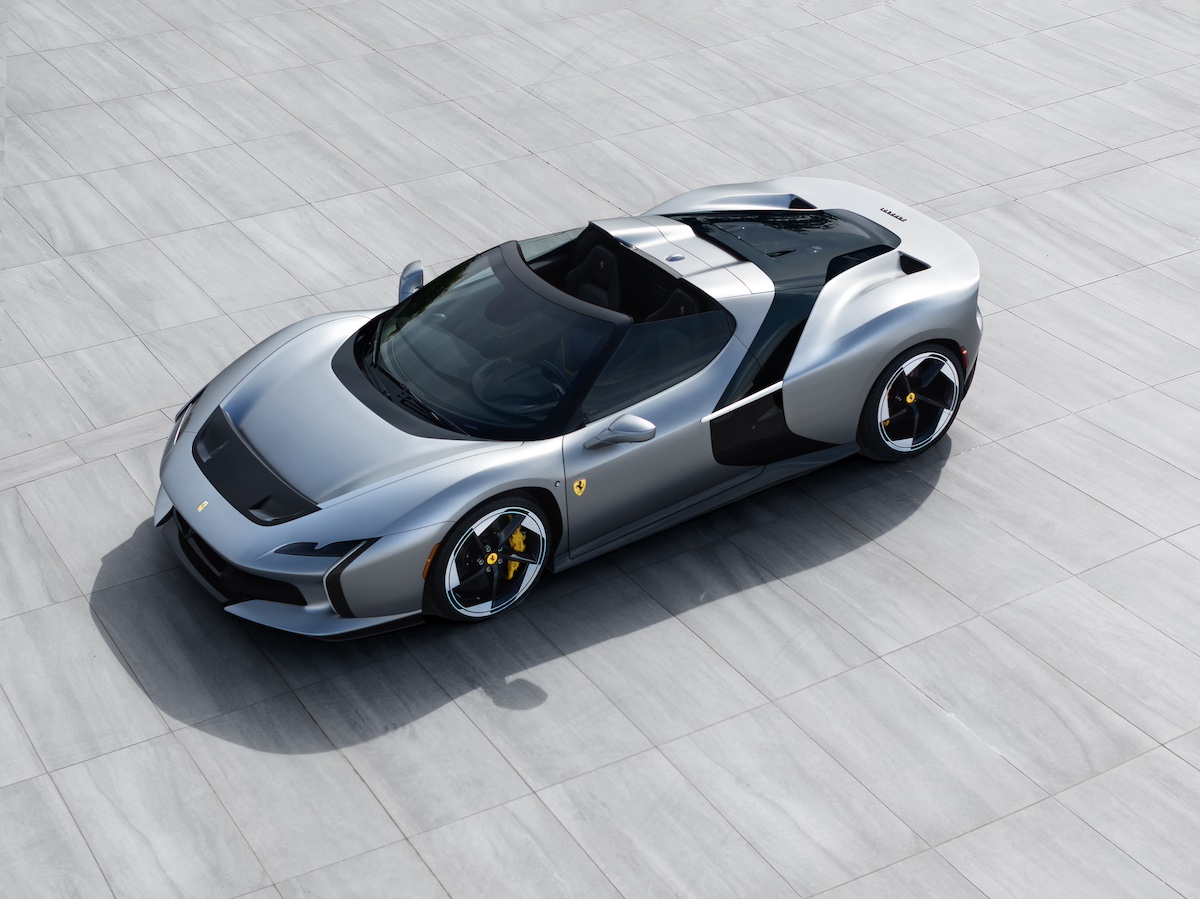
What the Ferrari HC25 does differently is overlay the new design grammar Ferrari has been writing with the F80 and 12Cilindri. Sharp crests cut into the body, lines are carved with geometric discipline, and the proportions are compressed to minimise the visual weight of the glazing. The result reads as F8-era from the wheels out and F80-era from the surface treatment in — exactly the cross-fade Manzoni was reaching for.
Most Ferrari One-Offs are about indulging a single client’s taste. The Ferrari HC25 reads differently. It’s a deliberate hinge moment, executed for a single owner but stating a position about where Ferrari design is heading and what it’s choosing to leave behind in the process.
Inside the Ferrari HC25 Bodywork, Lighting, and Cabin
The defining graphic move on the Ferrari HC25 is the dual-volume body structure, separated by a wraparound central black ribbon. It functions as both visual divider and thermal-management system — air intakes for the radiators and heat extraction for the powertrain are integrated into the band, so cooling becomes part of the design rather than hidden beneath it. Matte Moonlight Grey body against glossy black band is the car’s loudest contrast.
The door handle isn’t a handle in any traditional sense. It’s a long blade, milled from a single piece of aluminium, stretching across the door like a bridge between the two sides of the body. From a distance it reads as architectural detail; up close it’s the functional opening mechanism. This kind of thinking — where a critical interaction surface hides inside what looks like pure styling — is the hallmark of Special Projects work that’s gone all the way through development.
The headlight modules on the Ferrari HC25 haven’t appeared on any previous Ferrari, giving Manzoni’s team a slim lens with a central indentation that mirrors the split design of the rear lights. The DRLs run vertically for the first time on a Ferrari, exploiting the leading edge of the front wings to create a distinctive boomerang shape.
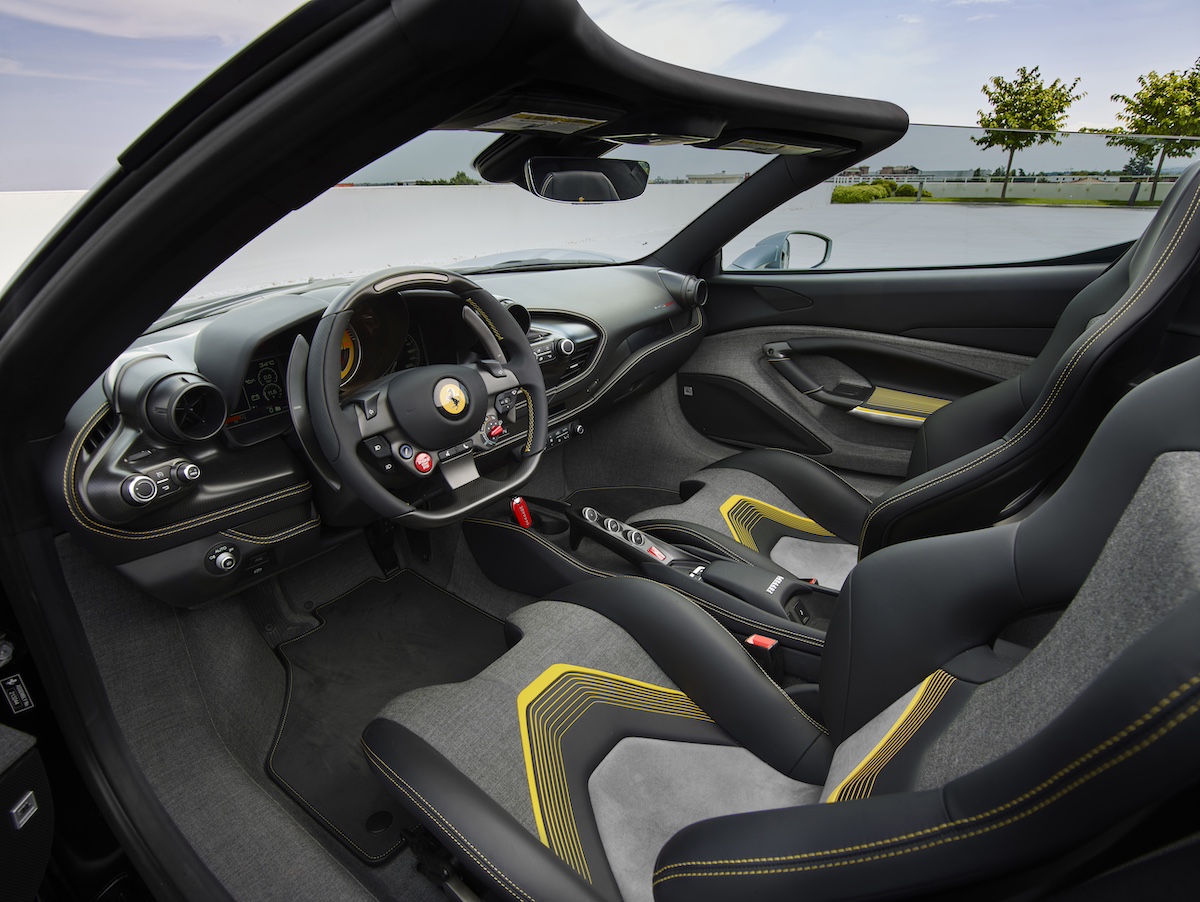
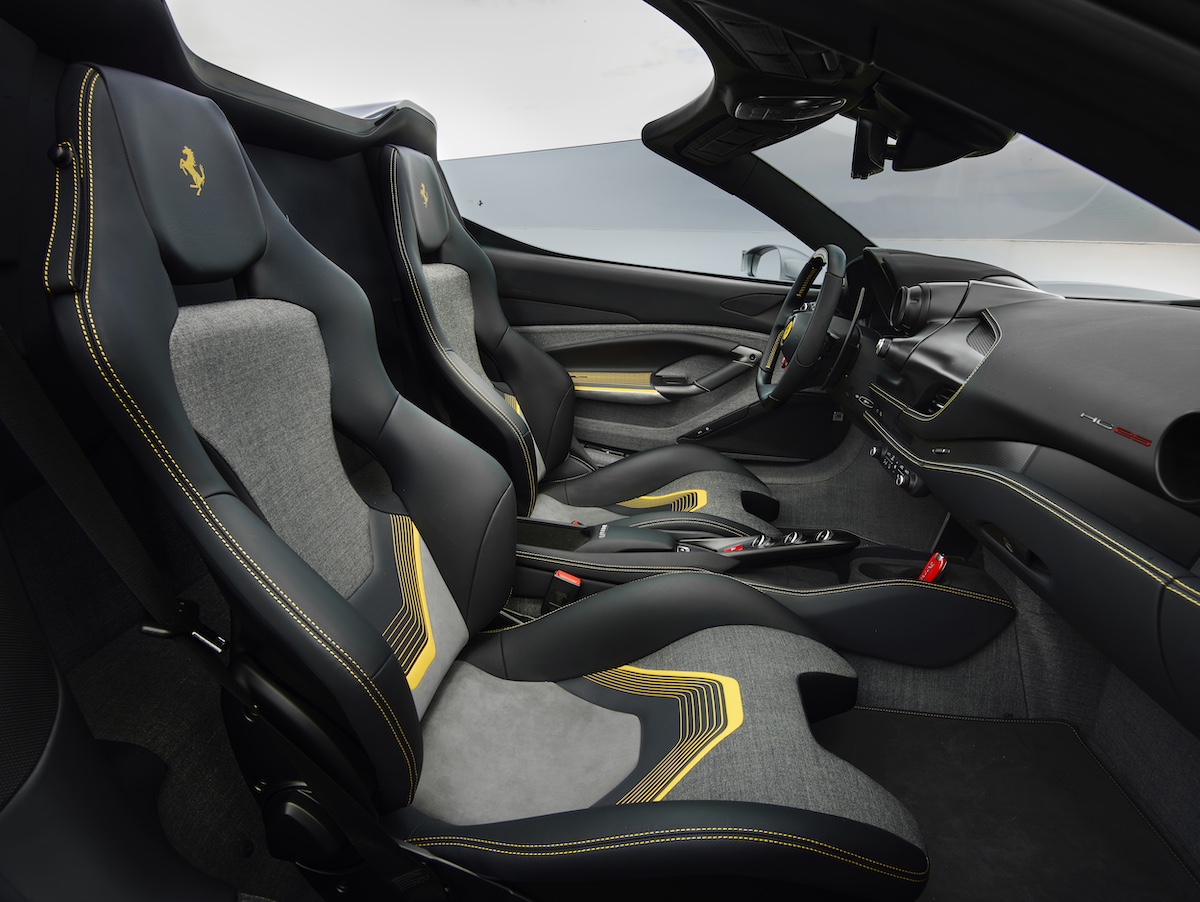
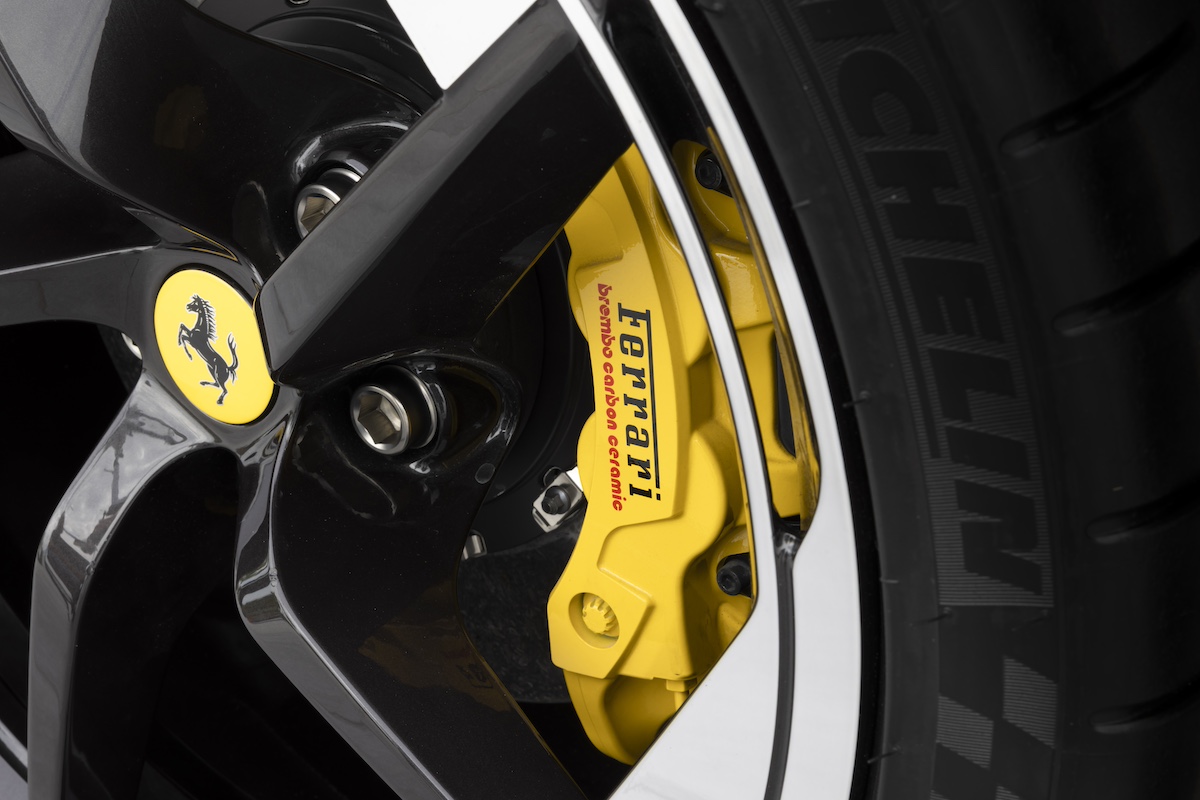
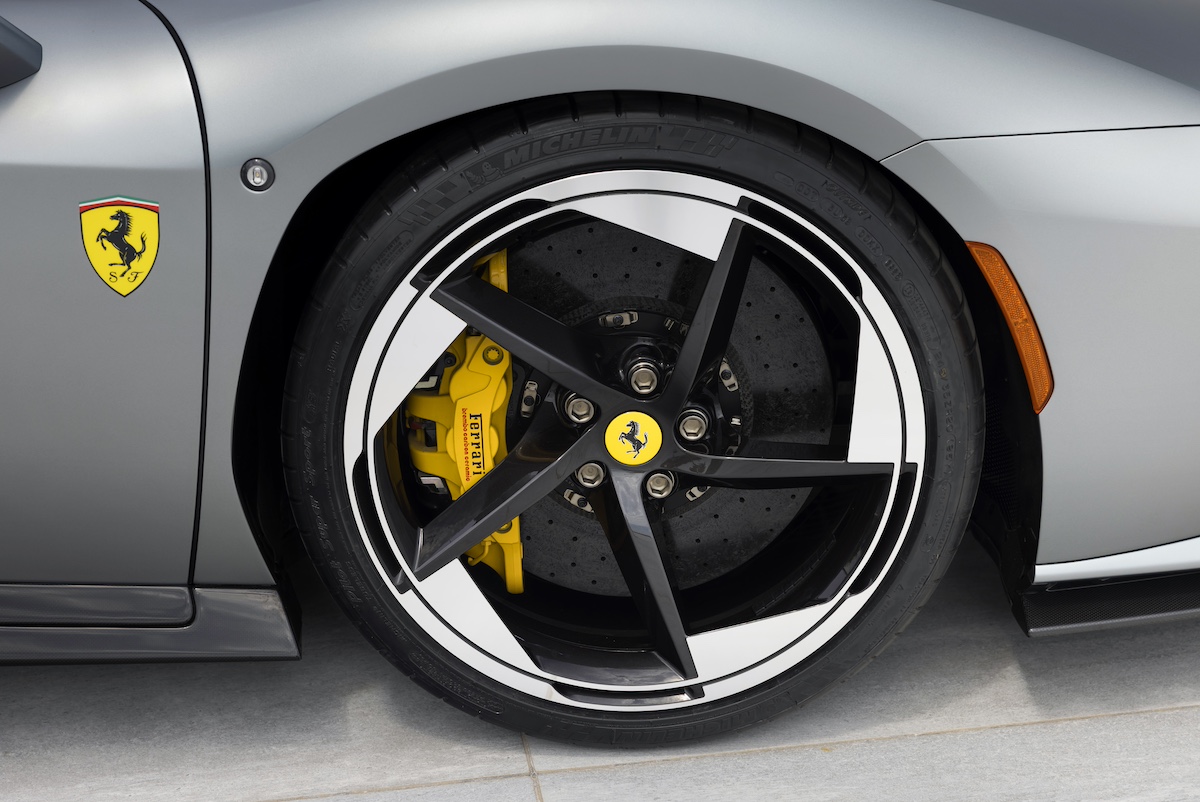
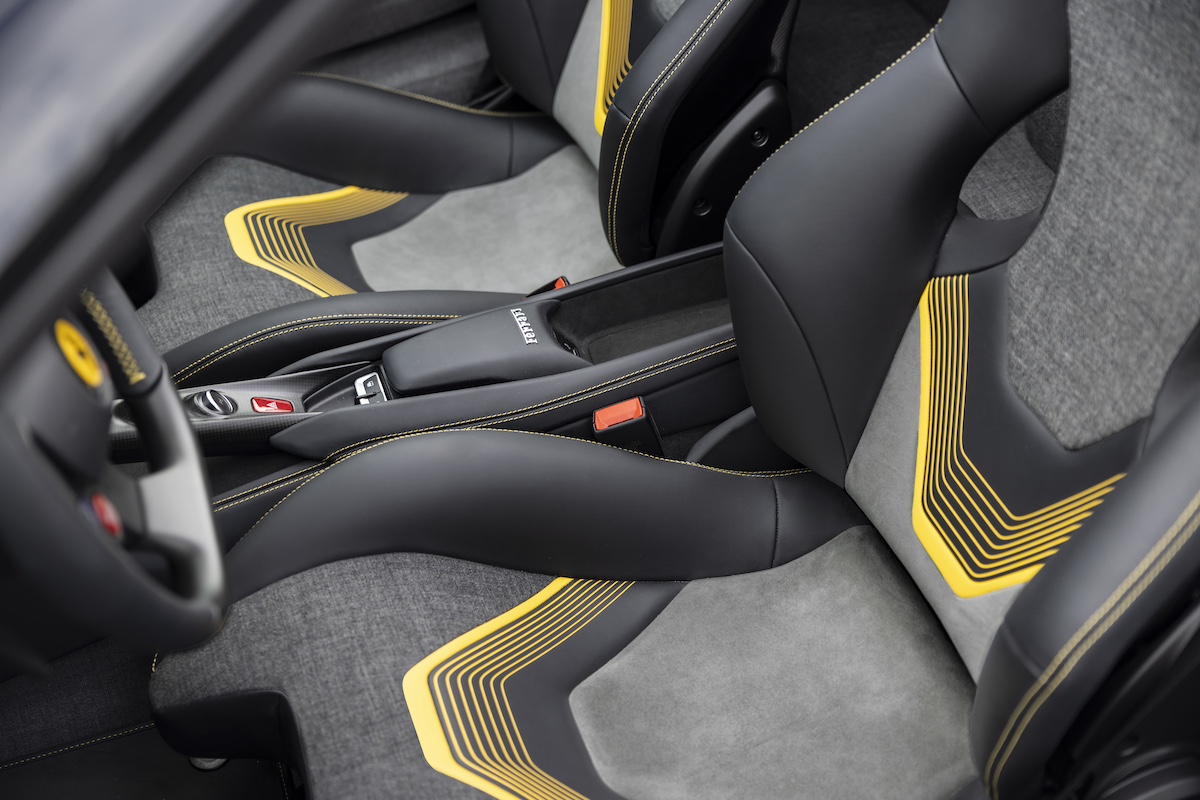
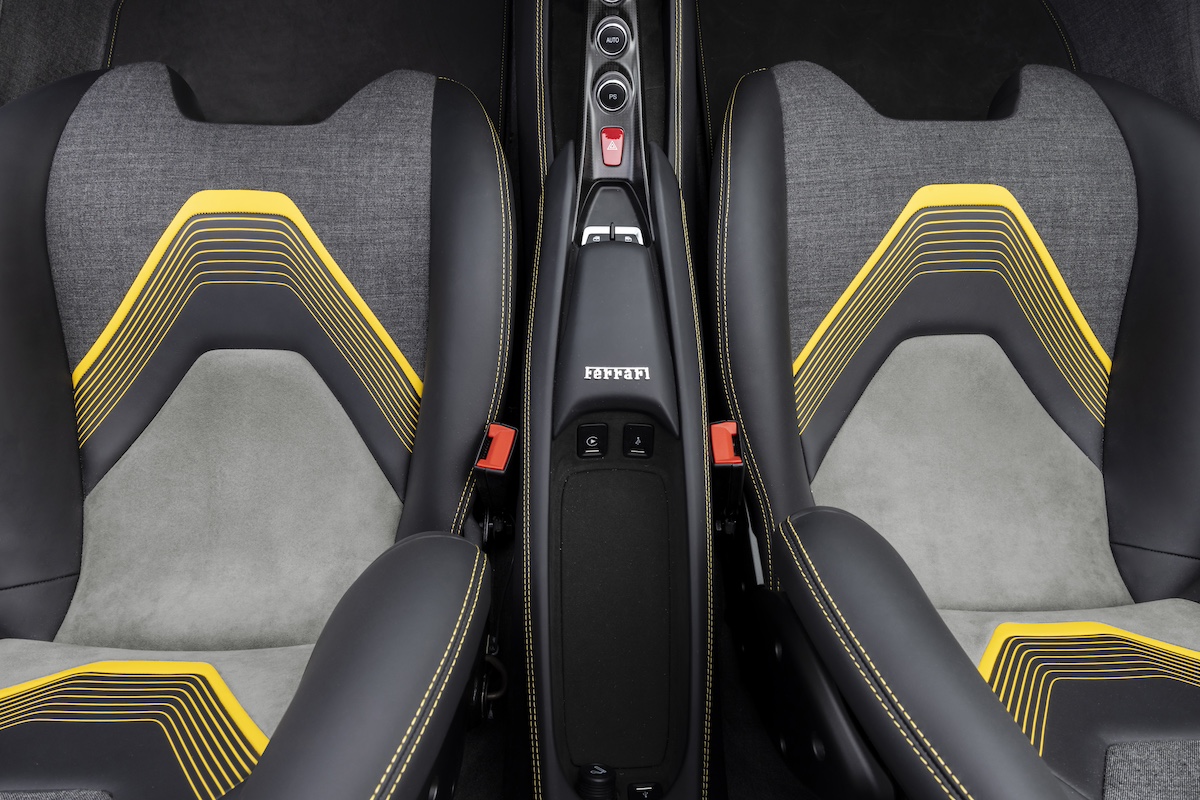
The five-spoke wheels echo that geometry — diamond-finished outer rim, double recessed groove that visually enlarges the diameter. Yellow accents on the logos and brake calipers carry through to the cabin, where they answer the technical grey fabric on the seats.
What the Ferrari HC25 Says About the Special Projects Programme
Ferrari’s Special Projects programme is the part of Maranello where a single client commissions a single car. The process runs roughly two years, hand-in-glove with the Ferrari Design Studio — sketch phase, then proportional development, then a full styling buck, then manufacture. The same single-client-commissioning instinct produces the Bugatti Brouillard and a handful of other pieces from Europe’s most exclusive bespoke programmes. The Ferrari HC25 sits in that company.
What sets this particular One-Off apart from a typical Special Projects build is its dual mandate. It exists for one client. But it also serves as the public marker of a transition in the catalogue — the moment the non-hybrid mid-rear V8 spider gets a final, definitive statement before the rest of Ferrari’s flagship lineup moves fully into hybrid V6 territory and naturally-aspirated V12 grand-touring on the front-engine side.
Under the bodywork, the Ferrari HC25 carries the F8 Spider’s 3.9-litre V8 — 720 cv at 7,000 rpm, 770 Nm of torque, 0–100 in 2.9 seconds, top end at 340 km/h. The seven-speed dual-clutch F1 gearbox carries over, as do the electronics platform and the dry-sump architecture. Nothing here is reinvented mechanically; the entire point of the car is the body and what it says, not the spec sheet.
The HC25 isn’t asking to be the next Ferrari you buy. It’s asking to be the last sentence of one of Ferrari’s defining chapters, written in matte Moonlight Grey with a black ribbon running through it, parked at a circuit in Austin while the company moves on to the next era. That’s a lot to put on a one-off roadster. The Ferrari HC25 carries it without straining.
About The Author

You may also like
-
BRABUS URBAN E Fragment Edition: 10 Exclusive Bikes
-
The Stark VARG SM Sköll Is a 500-Unit Study in Blacked-Out Restraint
-
Ducati’s New Cycling Range Brings Motorcycle DNA to Road, Gravel, and E-MTB Bikes
-
The AMB 002 Roadster Is Aston Martin’s First Motorcycle You Can Actually Ride to Work
-
FuelFest Returns to New Jersey Motorsports Park With Cody Walker and Tyrese Gibson
1 thought on “Ferrari HC25: The One-Off That Bridges Two Ferrari Eras”