
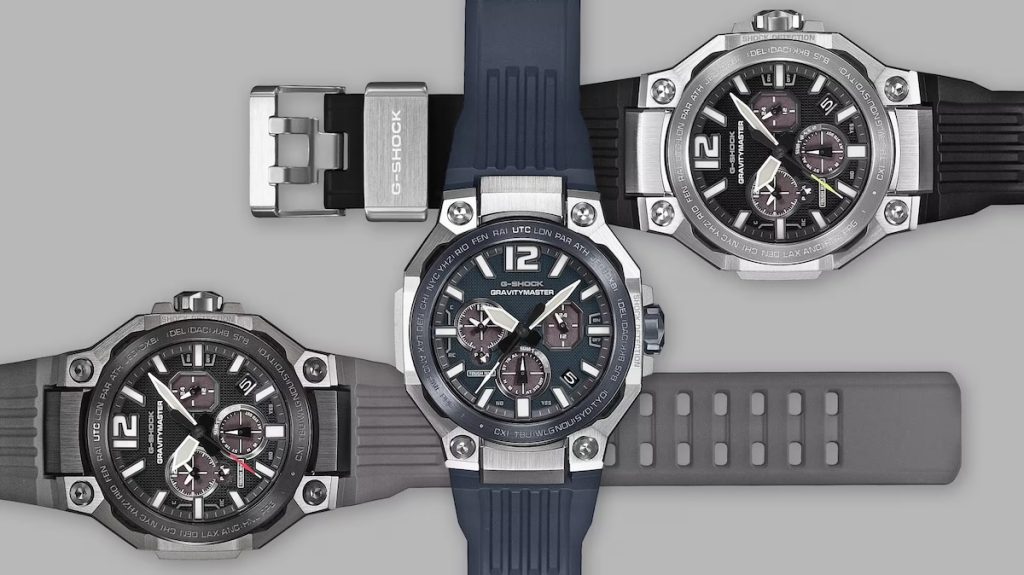
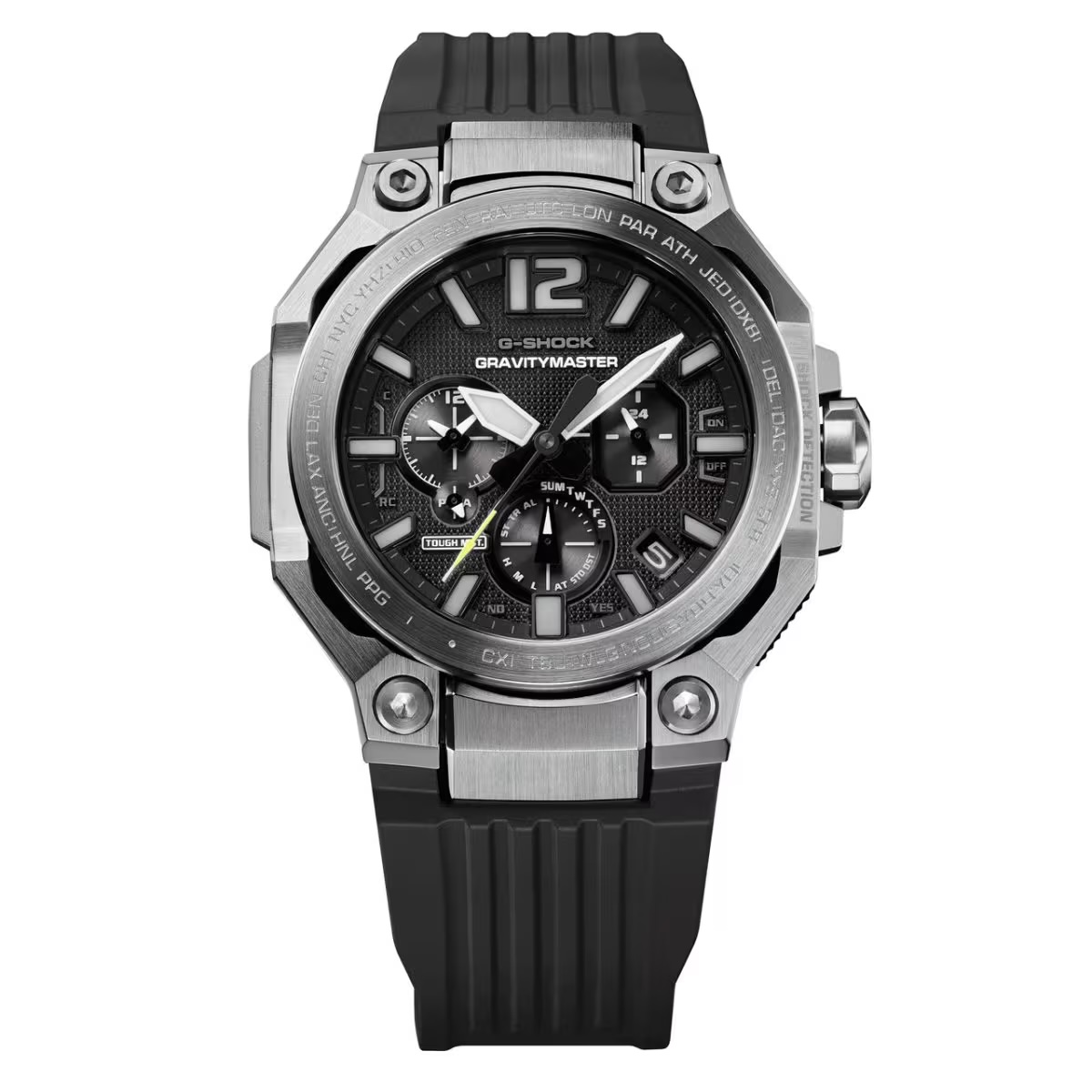
Casio’s G-SHOCK GRAVITYMASTER line has spent years on the same premise: a tool watch built for people who actually put watches through abuse. The new GWRB3000 series doesn’t rewrite that premise, but it does something more interesting than another aviation-themed colorway — it gives the watch something closer to a nervous system. For the first time, a G-SHOCK doesn’t just survive an impact or a magnetic field. It notices one, mid-wear, and corrects for it.
A G-SHOCK GRAVITYMASTER That Corrects Itself, Not Just Survives
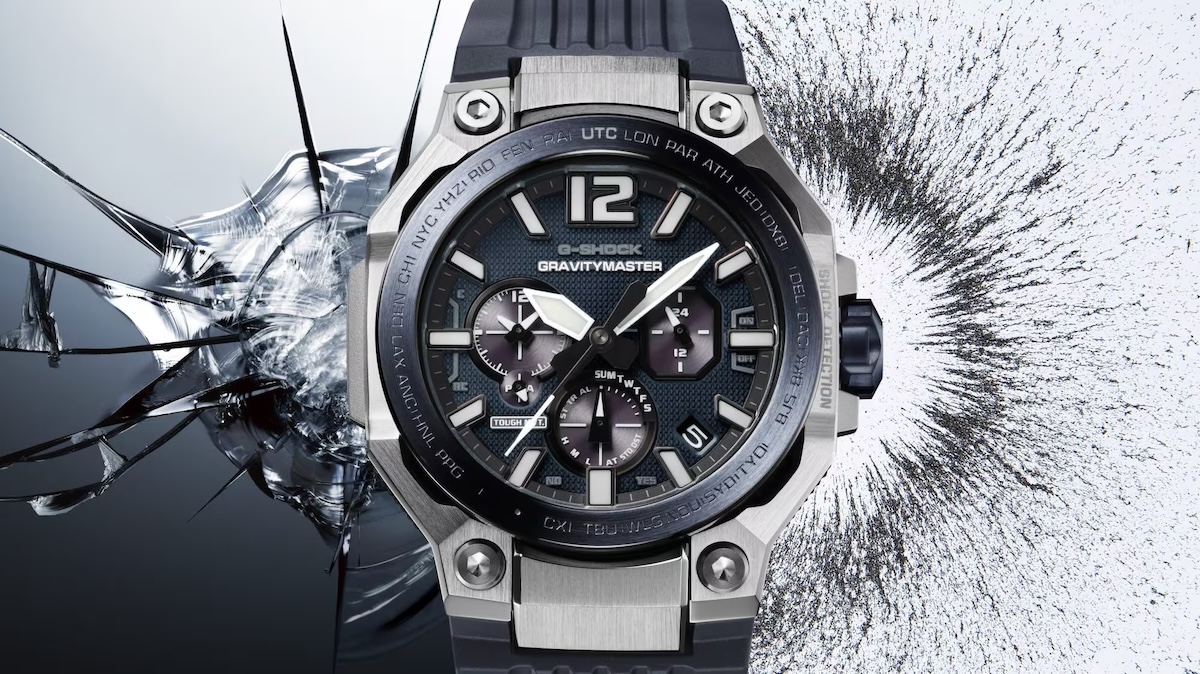
The new TOUGH MVT 2 movement is the real story here, and it’s a genuine step past the hybrid mount construction and auto-hand positioning G-SHOCK has leaned on for years. Shock Detection senses a strong impact and runs the hands through a full corrective rotation instead of letting the watch drift until someone notices it’s wrong. Magnetic Field Detection does the same job for interference — pausing hand movement the moment it senses a strong field, then resuming only once it’s clear.
That’s a different engineering bet than most rugged watches make. Hardening a case to tolerate abuse is a solved problem; building a movement that actively detects the abuse and self-corrects in real time is not, and it’s the detail worth watching if the G-SHOCK GRAVITYMASTER’s specs hold up once these watches are actually on wrists.
The Engineering Case for Believing the G-SHOCK GRAVITYMASTER’s Claims
The case itself was shaped using topology optimization — a simulation method that builds a structure around stress conditions rather than starting from a fixed shape and reinforcing it. Casio’s engineers ran repeated simulations against dropping shocks, centrifugal force, and vibration to land on a dual hollow structure pairing a resin shock absorber with a metal protection case, chasing lighter weight without giving up integrity. It’s the same durability-first thinking behind Casio’s MR-G Frogman and GMWBZ5000 full-metal releases, applied to a case that also has to look like an aviation instrument rather than a dive tool.
The rest of the build supports that read: a Carbon Core Guard structure in carbon fiber-reinforced resin around the module, a sapphire crystal with non-reflective coating, and a super matte dial produced through microfabrication to cut glare. Casio also worked carbon-neutral bio-based resin into several components, a materials choice that says more about the brand’s broader sustainability direction than it does about how this particular watch performs.
Where the G-SHOCK GRAVITYMASTER Points for the Rest of the Line
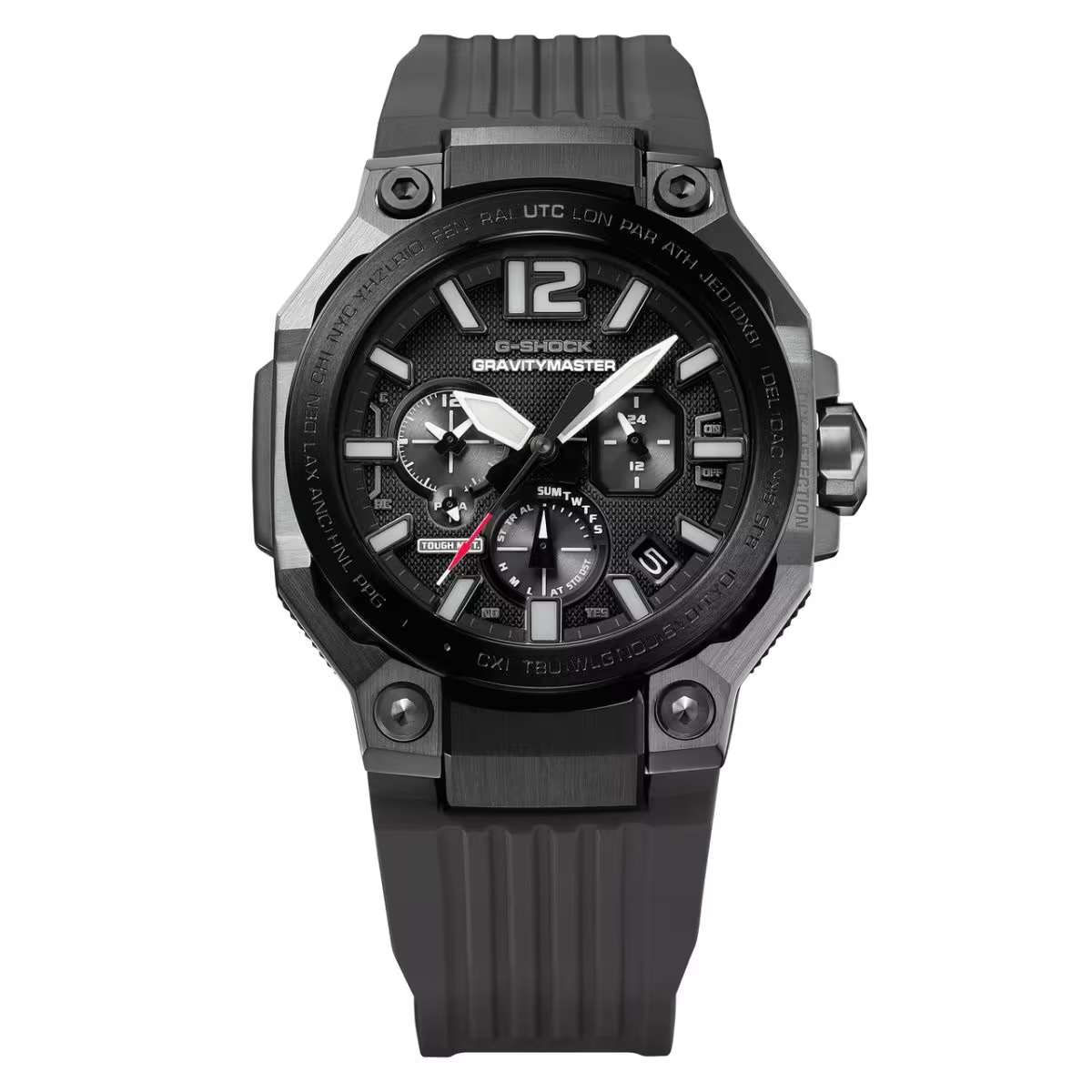
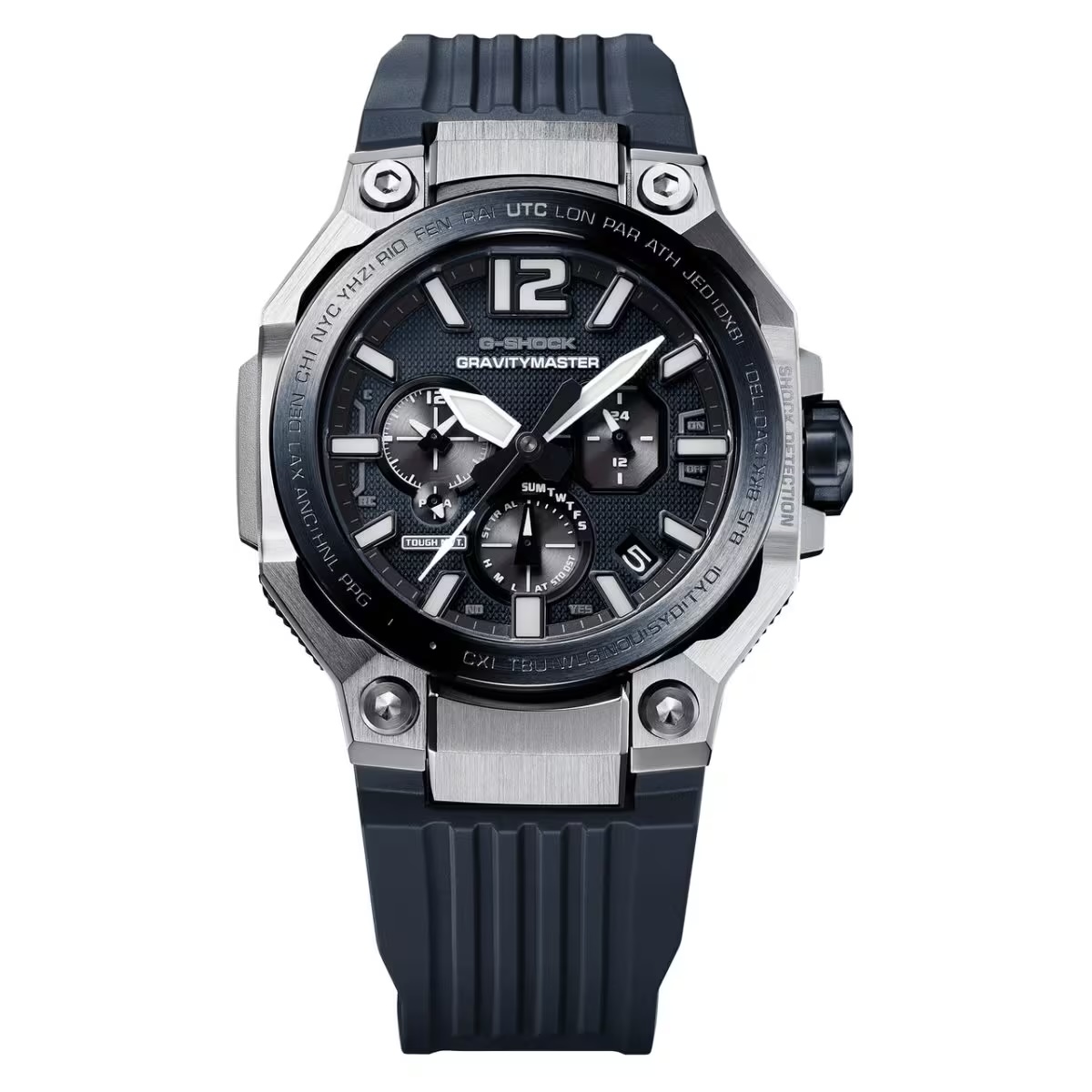
The three models split by bezel finish rather than capability — GWRB3000 in Black IP at $880, GWRB3000A in Blue IP at $990, and GWRB3000B in Silver at $1,100 — with every other spec, from Triple G Resist to Bluetooth connectivity to radio-controlled timekeeping, shared across the line. That pricing puts the GWRB3000 series in direct range of Casio’s existing MR-G and full-metal tiers, competing less on materials than on what the movement itself can now do.
The more interesting question isn’t really this specific lineup — it’s whether Shock Detection and Magnetic Field Detection stay a GRAVITYMASTER exclusive or become the next feature every G-SHOCK collection gets built around, the way solar charging and Bluetooth eventually did. Read that way, the GWRB3000 looks less like a single new watch and more like an early preview of where the whole line is headed next.
About The Author

You may also like
-
The Singer Heritage V72 Restores a Movement That Never Ran
-
The Tissot PR 100 Tour de France 2026 Special Edition Brings the Grande Boucle to Your Wrist
-
Zenith Chronomaster Revival Liberty II: A Limited Edition With Real Historical Weight
-
The Rolex Certified Pre-Owned Roadshow 2026 — Here’s What to Know
-
The Casio J Balvin Ring Watch Returns in Gold