

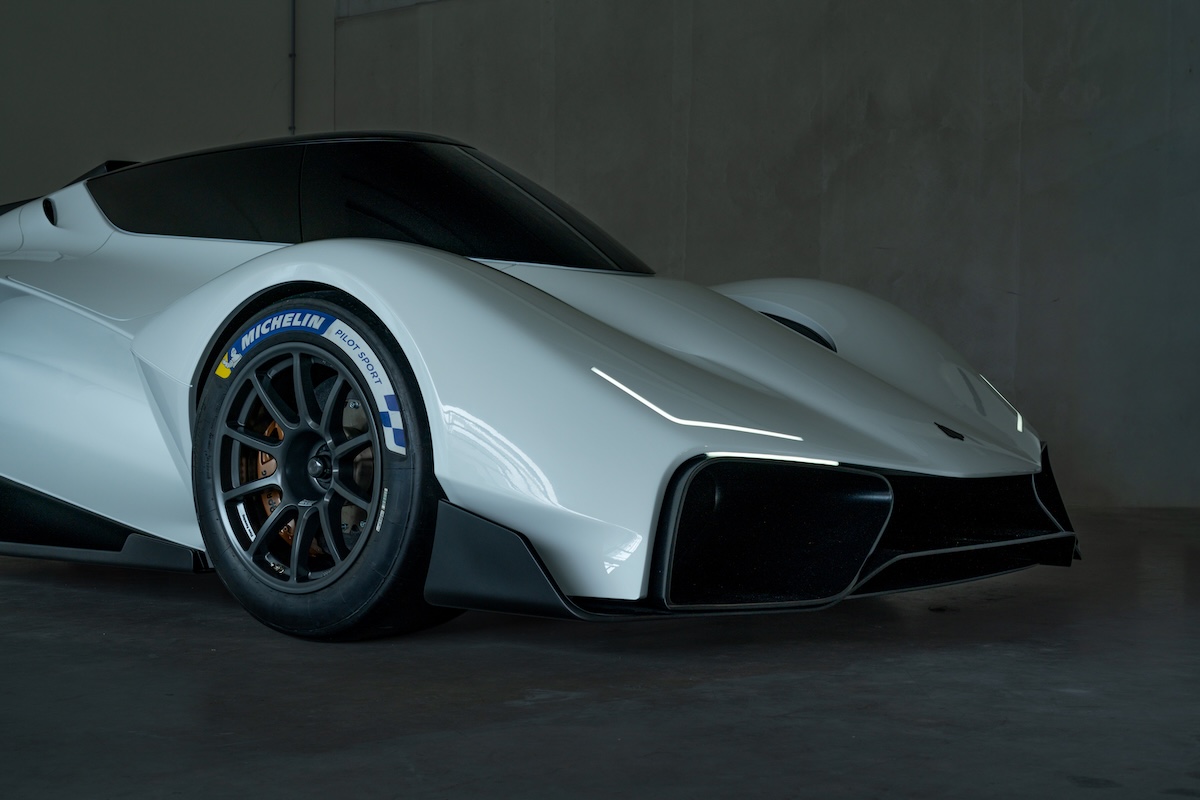
Sanrivatti has built a hypercar around a seat, and the engine in the Sanrivatti ONE is the part nobody needs to argue about. The Dutch start-up showed the car for the first time on November 13 at its headquarters in Arnhem, with a naturally aspirated 5.5-liter Judd V10 mounted behind the driver.
The figures are targets, and the car is a show car. The Sanrivatti ONE aims for 800 horsepower at 9,000 rpm and 700 Nm of torque, sent to the rear wheels through a Hewland six-speed sequential gearbox. Target dry weight is 1,100 kg, about 727 horsepower per tonne, with a projected top speed of 330 km/h, or 205 mph.
What Powers the Sanrivatti ONE
Judd lists 800 bhp at up to 9,000 rpm for its 5.0-liter V10, and the 5.5-liter version adds torque, so the target asks nothing outlandish of the engine. This is a race engine, and the chassis around it matches: a carbon-fiber monocoque, double-wishbone pushrod suspension, AP Racing carbon brakes, forged magnesium wheels and Michelin slicks. The wheelbase is 2,850 mm and the car stands 1,200 mm tall.
It lands close to the Hennessey Blackbird, which targets 800 to 850 hp from a 6.2-liter V8. Both cars skip turbochargers and hybrid help. The Blackbird is a gated-manual road car, while the Sanrivatti ONE sits on slicks and puts a track-focused driving experience first.
Why the Sanrivatti ONE Moves the Driver Forward
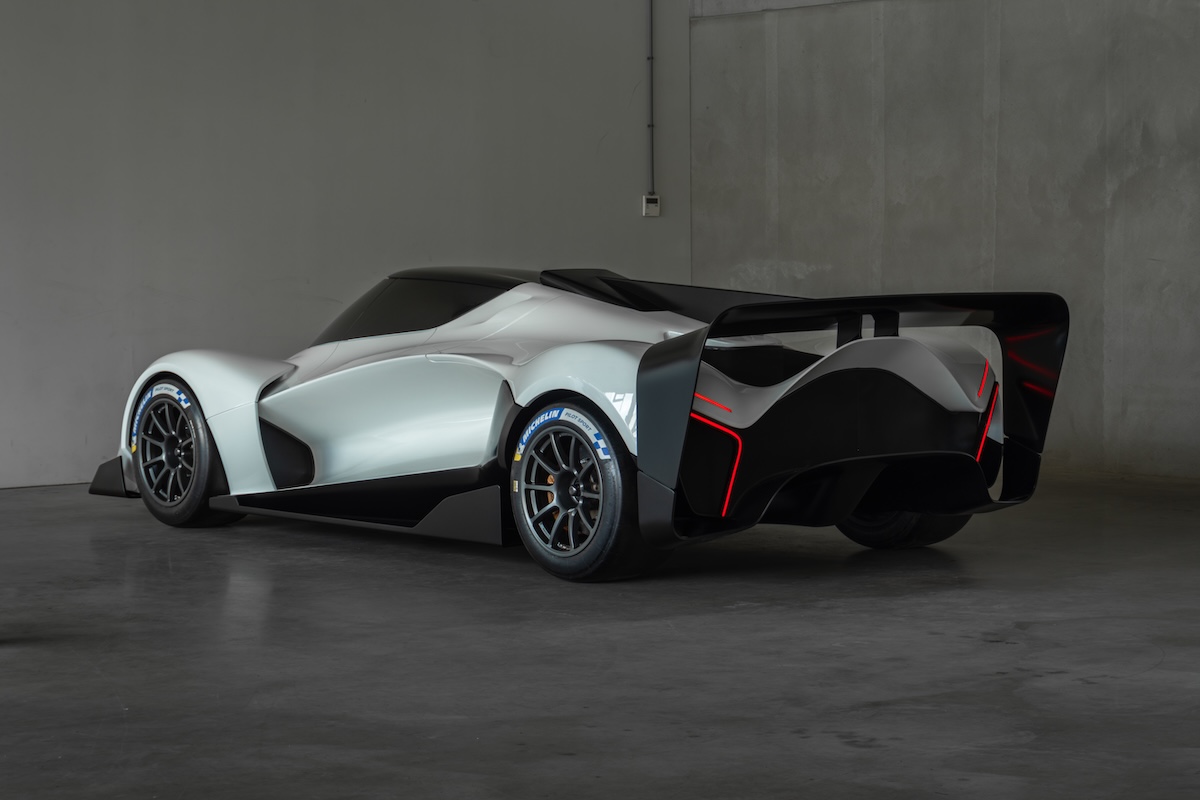
Sanrivatti’s defining idea is the Apex Position. Instead of reclining behind the front axle, the driver sits in a supported, head-forward posture, more central and farther forward, inspired by a high-performance motorcycle. Founder Santiago Sánchez Rivero says he wanted to question “what it actually feels like to drive,” and the canopy and every proportion of the car follow from that seat.
Sanrivatti says a simulation at Corner Three of Silverstone gave the Apex Position 3.2 times more visible racing surface than ten benchmark hypercars and track cars. That measures what the driver sees, not lap time, and a working proof-of-concept and a set of simulators are the only evidence so far.

What the Sanrivatti ONE Looks Like
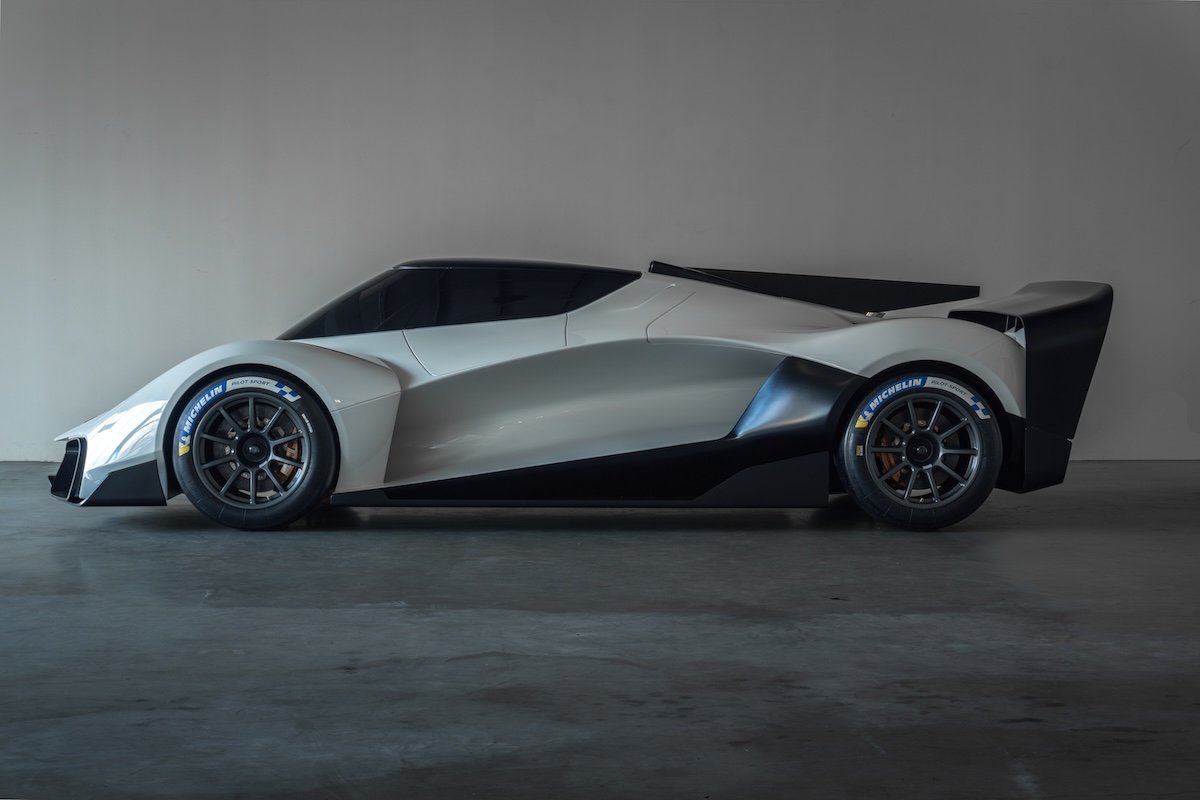
Designer Robin van Tilborg drew from a peregrine falcon in a dive and a fighter jet. A signature line runs down the side like the falcon’s dive, a single-piece canopy sits in the body like a cockpit, and two jet-style nose intakes feed air tunnels that pass through the car. At the rear, open bodywork sheds engine heat under a large wing that rises from the diffuser.
The engine and the chassis parts are familiar from racing. They make the Sanrivatti ONE credible, and they are not why it exists.
Nearly everything else on the car is something a racing engineer would recognize. The seat is the one part a motorcyclist would, and that makes riders the first people qualified to judge it.
About The Author

You may also like
-
Ariel Brings Its Full UK-Built Range to the United States
-
Cadillac Escalade-V 125th Anniversary Collector Series Limits the Run to 252 Units
-
The Porsche Mission S Trades the Big Screen for a Needle and a Phone Holder
-
The 2027 Ducati Panigale V4 S Puts Race-Shop Parts in a $35,995 Showroom Bike
-
Matchbox The Movie Puts a Triumph Scrambler 1200 XE in the Climactic Scene