
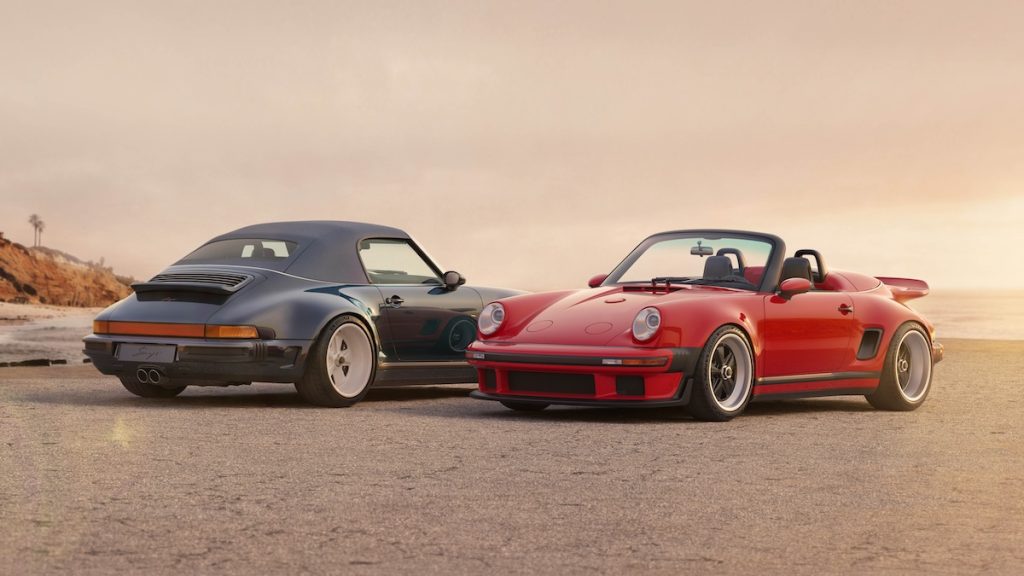

There are plenty of ways to “modernize” a classic 911, but the Porsche 911 Carrera Cabriolet Reimagined by Singer approaches the idea like a craftsman approaches a watch: with reverence for the original, and an unapologetic obsession with how every detail feels in motion.
This latest set of services from Singer Vehicle Design is rooted in a very specific 1980s muse—the rare wide-body 911 Carrera Cabriolet—, and it’s aimed squarely at high-performance, open-roof driving without losing the elegance that makes these cars timeless in the first place. Better still, it’s not a one-size-fits-all “special edition.” It’s a client-requested restoration, reimagining, and rebirth of an owner’s Type 964 Cabriolet, executed around the original monocoque and elevated with modern engineering that feels thoughtfully integrated rather than bolted on.
At the heart of it all is a new 4.0-liter, naturally aspirated flat-six that makes 420 horsepower and revs past 8,000 rpm, restored and developed by Singer with engineering collaboration from Cosworth. And yes—The Porsche 911 Carrera Cabriolet Reimagined by Singer is limited to 75 commissions, which tells you immediately who this is for: people who want the analog soul, the open-air experience, and the kind of performance polish that can only come from a deep, methodical program.
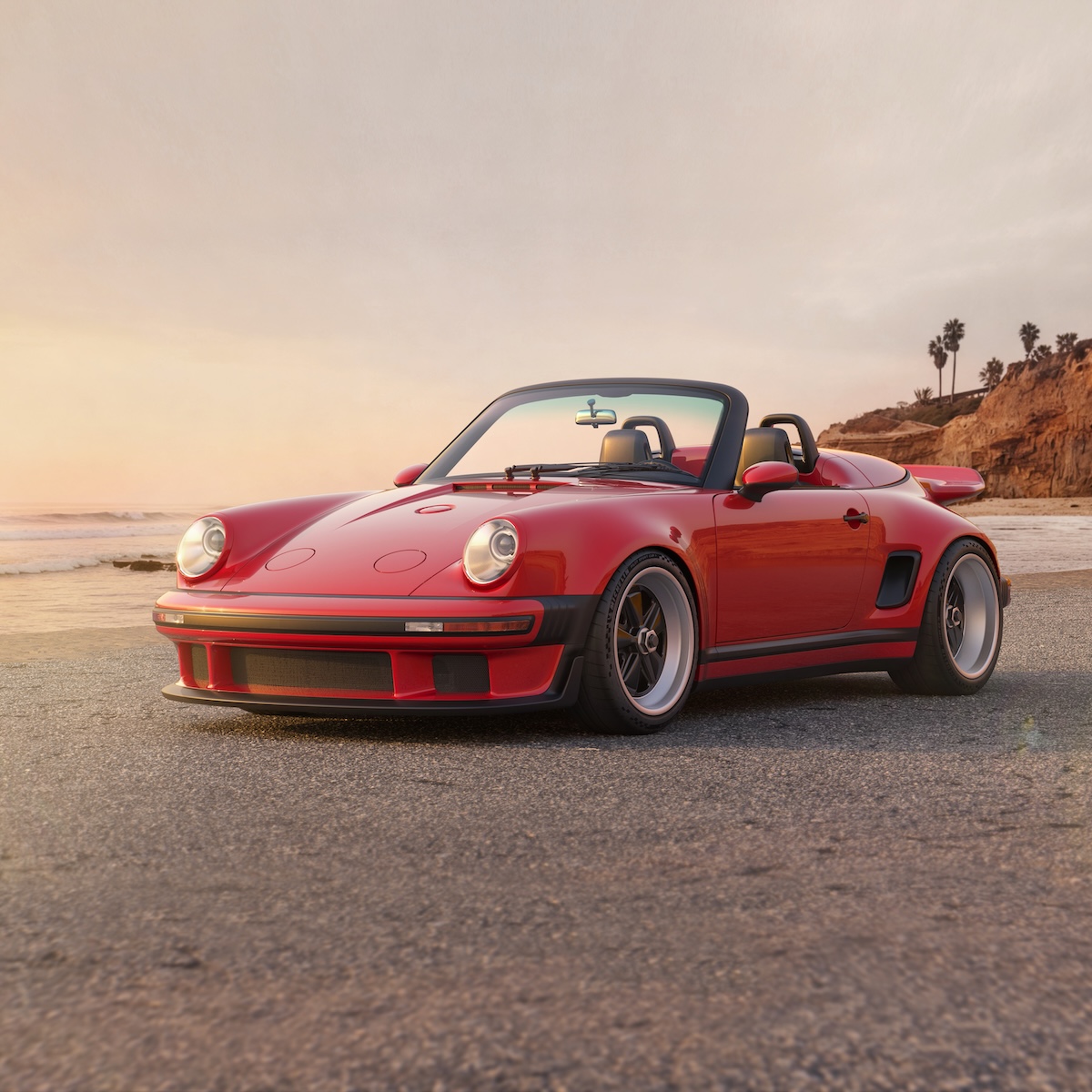
The Porsche 911 Carrera Cabriolet Reimagined by Singer and its 964 revival
The process behind the Porsche 911 Carrera Cabriolet Reimagined by Singer begins with something I always appreciate: the owner’s original car is the starting point, not a donor chassis pulled from a shelf. A Type 964 Cabriolet—built by Porsche more than thirty years ago—arrives at Singer and is carefully disassembled until the steel monocoque is exposed. That chassis is assessed, cleaned, and prepared, then strengthened with composite and steel reinforcement to increase torsional rigidity. For a cabriolet, that rigidity story is everything—handling, braking confidence, and overall refinement all start here, and Singer’s fifteen years of simulation and structural analysis show up in this foundational step.
From there, the design philosophy comes into focus. The car is restored around that strengthened 964 core, then clothed in lightweight carbon-fiber bodywork inspired by the 1980s Turbo-look widebody vibe. The whole point is to preserve the iconic DNA while sharpening function through modern material science—reduced mass, enhanced stiffness, and the kind of crisp response that makes a great road car feel alive at normal speeds, not just heroic ones. The Porsche 911 Carrera Cabriolet Reimagined by Singer is explicitly about open-roof performance, so it also gets a newly developed lightweight “Z pattern” folding roof mechanism designed for smooth operation and a clean silhouette, whether the roof is up or down.
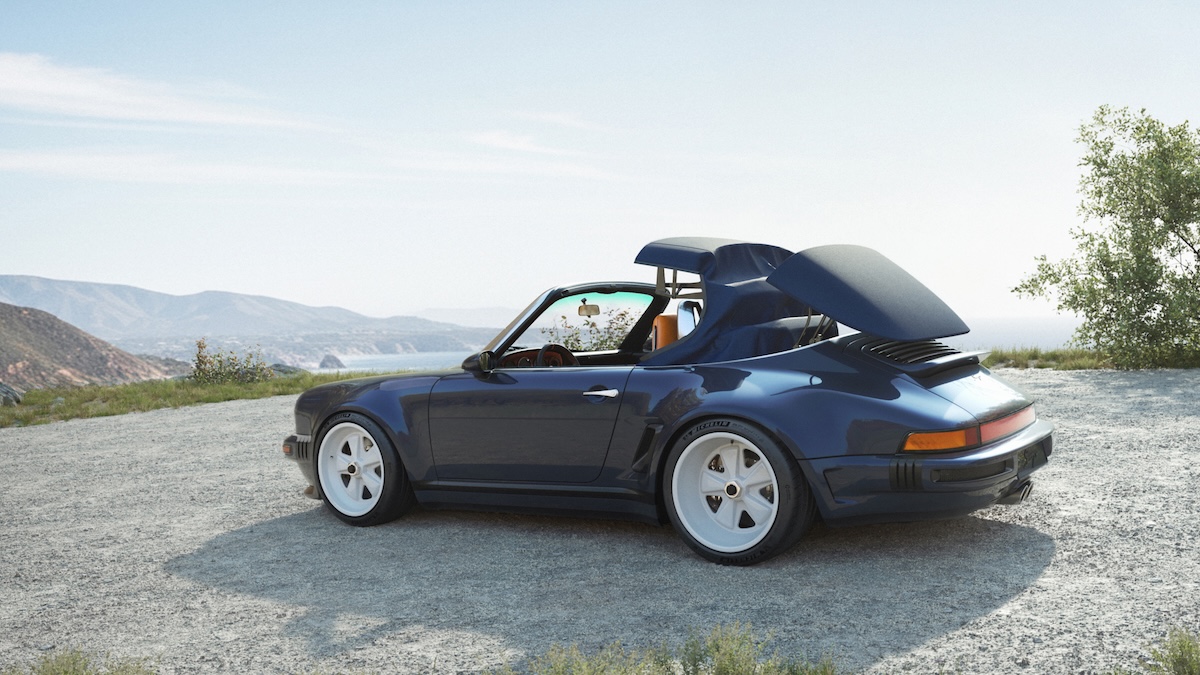
The Porsche 911 Carrera Cabriolet Reimagined by Singer at 8,000+ rpm
If you’re the type who believes the best sports cars are defined by their engines, the Porsche 911 Carrera Cabriolet Reimagined by Singer is going to speak your language. The flat-six is based on the Type 964’s engine but thoroughly reborn with 4.0L capacity, four valves per cylinder, variable valve timing, water-cooled cylinder heads, air-cooled cylinders, and an electrically powered fan—an architecture that blends old-school character with modern control and broader usability across more markets.
It’s also the first engine restored for a Porsche 911 Reimagined by Singer to feature variable valve timing, improving drivability at low speeds and power at high revs, and the first naturally aspirated Singer-restored engine to use water-cooled cylinder heads combined with air-cooled cylinders and an electrically powered fan, drawing on learnings from the DLS Turbo program.
The collaboration with Cosworth focuses on the hard parts—the places where experience shows, like combustion chamber design and intake/exhaust path, plus the variable valve timing work that can make a high-revving engine feel both sharp and civilized. The result is 420 horsepower and a torque curve broadened across more of the rev range, which matters because this is a car meant to be driven, not just displayed.
Singer pairs that engine with an optimized six-speed manual gearbox sending power to the rear wheels, and I love that they’ve thought about the emotional mechanics too: owners can specify a raised gear shifter with an exposed shift mechanism, turning every shift into a tactile reminder that this car was built by people who care.
Then there’s the exhaust: a newly developed titanium system that lets the flat-six breathe freely and sing the way a naturally aspirated 911 should. In a world where so many high-end builds chase numbers through forced induction, the Porsche 911 Carrera Cabriolet Reimagined by Singer doubling down on big-hearted, naturally aspirated response feels like a statement—especially when it’s backed by engineering this modern.
The Porsche 911 Carrera Cabriolet Reimagined by Singer on real roads
Open-top performance only counts if the chassis, brakes, and electronics are tuned for reality—imperfect pavement, changing weather, and the moments where a driver wants support without feeling smothered. The Porsche 911 Carrera Cabriolet Reimagined by Singer brings in the latest generation ABS, traction control, and electronic stability control developed with Bosch, plus selectable drive modes that allow the driver to tailor intervention to conditions and confidence. Singer lists five modes—Road, Sport, Track, Off, and Weather—giving the car a broader operating envelope than any period 964 could dream of.
Suspension is anchored in Singer’s experience with its turbocharged services and uses four-way adjustable dampers with electronic damping control that can be adjusted from the driver’s seat, plus a nose lift system for day-to-day usability. Braking can be specified with carbon-ceramic brakes developed through Singer’s DLS services, sitting behind 18-inch center-lock wheels—serious stopping power that matches the engine’s intensity. And because tires are the final translator between engineering and asphalt, Singer specifies the latest Michelin Pilot Sport tires to put that power down with modern grip and predictability.
Aerodynamically and visually, owners can choose their own flavor of 1980s drama. The car can be specified with or without the whale tail rear wing, just like the period Carrera Cabriolet, and Singer extends that choice to a fixed wing or a speed-activated wing to manage stability at speed. Cooling is addressed with a deep front spoiler optimizing airflow up front, while intakes at the leading edges of the rear fenders direct cooling air to the engine compartment. High-performance auxiliary driving lights can also be specified, rising from the hood when activated and folding flush when not—pure theater, but also genuinely functional when you’re doing the kind of driving this car invites.
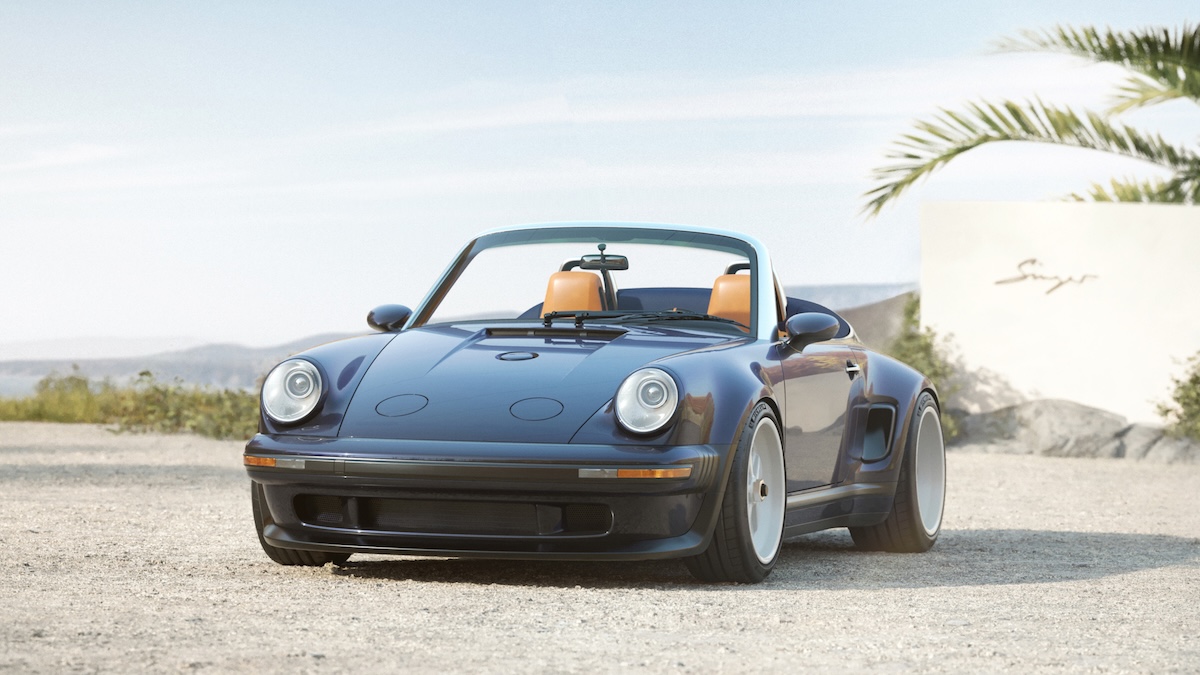
Inside, the Porsche 911 Carrera Cabriolet Reimagined by Singer is where I’d argue Singer separates itself from almost everyone else. The familiar 911 instrument layout is reimagined with hand-built gauges executed to high-watchmaking standards, and owners can request stitched and burnished leather seams throughout the cabin for the first time—an old-world finishing touch that fits the Club For Man mindset perfectly.
Technology is there, but restrained: navigation and phone connectivity are integrated discreetly, and CarPlay is part of the available touring and sports-focused inspiration specs. The seats can be lightweight sports seats, full track seats, or something in between, and Singer’s material palette runs from velvet corduroy centers to Interferenza cloth, depending on how you want the car to feel.
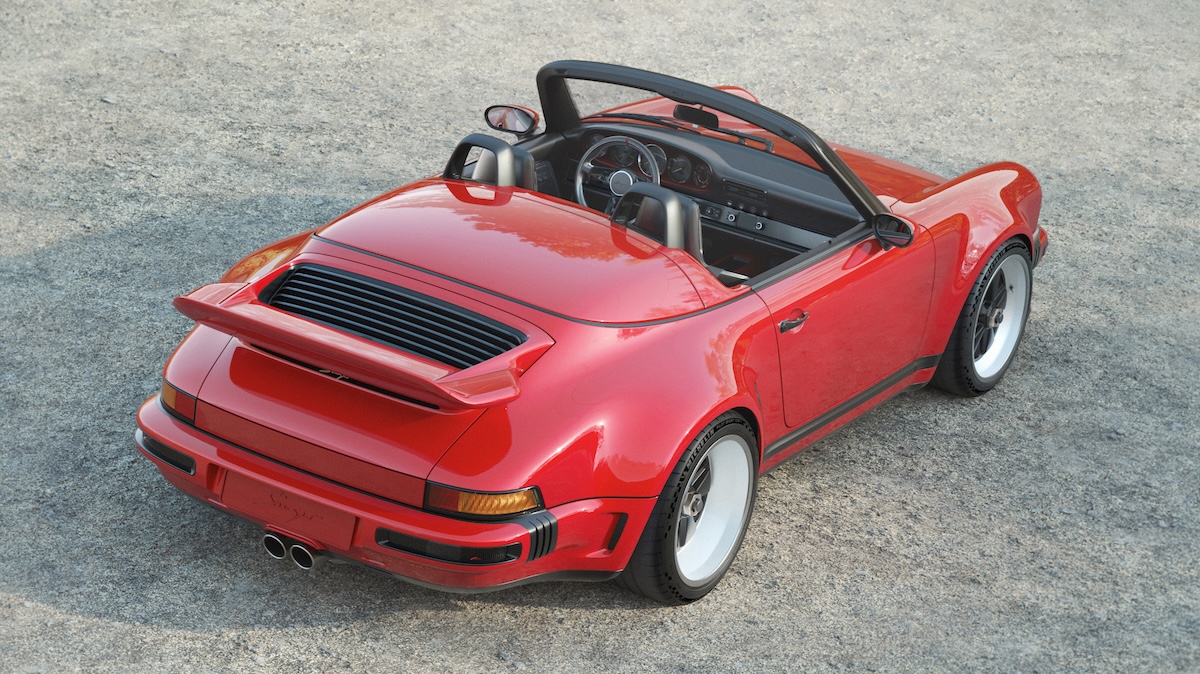
Singer even acknowledges the reality that some owners want two personalities in one car: you can specify both sets of front and rear bodywork—touring-focused and sports-focused—delivered with a bespoke flight case so the configuration can be changed as required. That’s not a gimmick; it’s an admission that this is a living object, meant to adapt to the owner’s life.
The development program is equally serious. Test cars complete thousands of miles at famous proving grounds, including Millbrook Proving Ground, IDIADA, Nardò Ring, and Nürburgring, where TÜV certification is carried out for Singer’s services. That kind of validation matters when you’re building a 420-horsepower, 8,000+ rpm, open-top restomod intended to be driven hard, not babied.
Pricing is intentionally bespoke—each build is unique and depends on the specification chosen by the owner—and support is structured for global clientele via Singer’s Global Partner Network across North America, Europe, the Middle East, Asia, and Australasia. But the biggest limiting factor isn’t money, it’s time and access: with only 75 commissions, The Porsche 911 Carrera Cabriolet Reimagined by Singer is less “model launch” and more “invitation to collaborate on your personal forever car.”
About The Author

Discover more from Club For Man
Subscribe to get the latest posts sent to your email.